Today in History : March 15th

On this date in...

1872: Governor-General Rafael de Izquierdo creates the Telegraph Practical School. Telegraphy is the long-distance transmission of written messages without physical transport of letters. It is a compound term formed from the Greek words tele (τηλε) = far and graphein (γραφειν) = write. Radiotelegraphy or wireless telegraphy transmits messages using radio. Telegraphy includes recent forms of data transmission such as fax, email, telephone networks, and computer networks in general.

1899: General Mariano Trias submits to President Aguinaldo the report of the Commission of Investigation on the incident at San Juan Bridge on February 4, 1899. The Commission concludes that the Americans were the first to fire and that their attack had been premeditated.
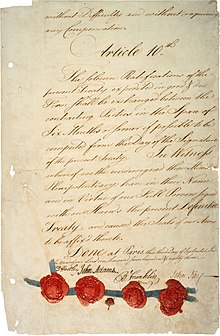
1900: Manila officials do what they can to carry out the provisions of the treaty of Paris. Spanish officers about to be returned to Spain are urged to take their Filipino wives with them. The Treaty of Paris, signed on 3 September 1783, ratified by the Congress of the Confederation on 14 January 1784 and by the King of Great Britain on 9 April 1784, formally ended the American Revolutionary War between the Kingdom of Great Britain and the United States of America, which had rebelled against British rule.

1912: End of the term of William Cameron Forbes as governor-general of the Philippines. He was the son of William Hathaway Forbes, president of the Bell Telephone Company, and wife Edith Emerson, a daughter of Ralph Waldo Emerson, nephew of James Grant Forbes and grandson of Francis Blackwell Forbes. After graduating from Harvard in 1892, he embarked on a business career, eventually becoming a partner in J. M. Forbes and Company.

1946: A scroll commemorating “the brave fight of the Filipino people for liberty” and signed by thousands of war-bond purchasers in the city of Washington, D.C., U.S.A., is handed to Paul V. McNutt for delivery to the Philippines. --President Sergio Osmeña places the Military Police Command of the Philippine Army under the Secretary of the Interior.
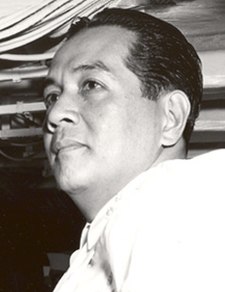
1963: President Macapagal directs Budget Commissioner Faustino Sy-Changco to release the amount of P6 million for the purchase of the Tatalon Estate in Quezon City.

Today in History : March 14th

On this date in...

1872: Jose Maria Basa, Antonio Maria Regidor, Balbino Mauricio, Ramon Maurente, Maximo Paterno, Father of Jose Maria Guevara, Father Agustin Mendoza, Feliciano Gomez, Pedro Dandan, Anacleto Desiderio, Miguel Lara, Miguel Rodriguez, Miguel Fernandez, Joaquin Pardo de Tavera, Pio Maria Basa, Father Mariano Sevilla, and others, sail on board the Flores de Maria bound for the Marianas islands to serve their prison terms for complicity in the Cavite Uprising.

1898: From Malolos Don Pedro A. Paterno replies to General Aguinaldo’s letter stating that he did not consent to the division of the P200,000 received from the Spanish Government by the revolutionary leaders left behind in Biyak-na-Bato. He says that he arrived in Manila from Hongkong on January 11, 1898 and learned that the money had been divided by the leaders on December 29, 1897.

1899: General Otis reports to the Adjutant-General in Washington that General Wheaton has attacked a large force of “the enemy” with heavy losses on the “Filipino” side. Other dispatches state that “fierce opposition” was offered by the Filipinos. Major Grant is ordered to take one of the gunboats and destroy all the vessels in Laguna de Bay.

1901: General Mariano Trias surrenders to the Americans in Santa Cruz de Malabon, Cavite. Mariano Trías y Closas is considered to be the first de facto Philippine Vice President of that revolutionary government established at the Tejeros Convention - an assembly of Philippine revolutionary leaders that elected officials of the revolutionary movement against the colonial government of Spain.

Today in History : March 13th

On this date in...

1877: Birth of Leandro Fullon, revolutionary general and provincial governor of Antique. Died on October 16, 1904.

1899: General Wheaton’s Provincial Brigade sets out from San Pedro Makati at 6:30 a.m., beginning the extension of American lines eastward to the shores of Laguna de Bay. Frank (Francis) Wheaton was a career military officer in the United States Army during the American Civil War and Indian Wars.

Today in History : March 12th

On this date in...


1907: The Partido Independiente Immediata and Union Nacionalista are fused into the Nacionalista Party.
1946: President Sergio Osmeña creates the National Urban Planning Commission to coordinate the reconstruction and development of urban areas throughout the Philippines.


2001: Paduka Mahasari Maulana al Sultan Esmail D. Kiram is proclaimed new sultan of Sulu and North Borneo at the Sulu State College upon the recommendation of the Ruma Bichara and the Council of Datus. Paduka Mahasari Maulana al Sultan Esmail D. Kiram is proclaimed new sultan of Sulu and North Borneo at the Sulu State College upon the recommendation of the Ruma Bichara and the Council of Datus. He is the 37th in an unbroken line of succession beginning with Sharif-al-Hashim in 1450.

Today in History : March 11th

On this date in...

1565: Miguel López de Legazpi reaches Camiguin from Limasawa. Legaspi, also known as El Adelantado (The Governor) and El Viejo (The Elder), was a Spanish conquistador who established one of the first European settlements in the East Indies and the Pacific Islands in 1565. After obtaining peace with various indigenous tribes, López de Legazpi made the Philippines the capital of the Spanish East Indies in 1571.

1576: Juan de Salcedo, “the Hernan Cortes of the Philippines,” dies at Vigan. Juan de Salcedo was a Spanish conquistador. He was born in Mexico in 1549 and he was the grandson of Miguel López de Legazpi and brother of Felipe de Salcedo. Salcedo was one of the soldiers who accompanied the Spanish colonization of the Philippines in 1565.

1876: A protocol signed by England and Germany recognizes Spanish rights to the Tawi-Tawi group and the chain of islands stretching from Sulu to Borneo.

1876: A Supreme Court is established in the City of Cebu. Cebu is a province in the Philippines, consisting of Cebu island and 167 surrounding islands. It is located to the east of Negros, to the west of Leyte and Bohol islands.

1892: A royal decree is issued creating the Superior Normal School for Women Teachers in Manila under the direction of the Augustinians. University of Wisconsin–Superior is it's name today.

1898: General Emilio Aguinaldo appoints General Ambrosio Flores as quarter master for the armed forces of the Philippine Revolutionary government.

1899: Premier Mabini sends telegrams to the municipal and military chiefs of the provinces along the coasts instructing them to admit foreign merchant ships which might want to take loads of merchandise. --Desultory firing occurs at San Pedro Makati and caloocan. Filipinos are driven from a trench they have begun to construct. A War Department order withraws permission for families of officers and enlisted of officers and enlisted men to accompany troops to Manila.

1942: General Douglas MacArthur and his family leave Corregidor for Australia.

1945: Romblon and Zamboanga are occupied by the Americans in World War II.

1946: Col. Akira Nagahama, terror of Fort Santiago and head of the kempeitai during the latter part of the Japanese occupation, is found guilty and sentenced to death by hanging by the U.S. military tribunal.

1947: The Filipino people, headed by Manuel A. Roxas, ratifies the nation-wide plebiscite on the “Parity Amendment” to the Constitution. This gives the Americans and Filipinos equal rights in the exploitation of the natural resources of the Philippines.

1988: To counteract the threat of war in Mindanao, the government creates the Regional Consultative Commission. The commission is given the task to draft a charter for an autonomous region in Mindanao. The body is composed of 55 members, 27 from electoral districts in Mindanao and 28 others chosen by President Aquino. The secretariat is based in Zamboanga City.

Today in History : March 10th

On this date in...

1583: Death of Governor-General Gonzalo Ronquillo de Peñalosa, founder of Nueva Caceres in 1582. His first official action was to order Manila to become Philippines's political and economic capital in 1582. That same year, he established the Palacio del Gobernador (Governor's Palace) in Intramuros, Manila to integrate all governmental activities in the Philippines.

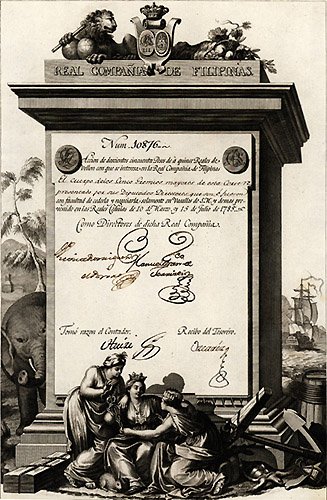
1785: The Real Compañia de Filipinas is established with a capital stock of P8,000,000 in 32,000 shares of P250 each. Its chief objective is to open commercial relations among the different colonies of Spain.

1820: King Ferdinand VII issues his famous manifesto proclaiming the re-establishment of the Cortes and the restoration of the Constitution of 1812.

1869: Birth of Macario Adriatico, lawyer, legislator, orator, scholar, journalist, and editor of La Independencia, in Calapan, Mindoro. He also helped liberate Romblon from the colonizers, and became Comandante de Estado Mayor of the Filipino Army in Panay at the dawn of the Filipino-American War until 1901. As a writer, Adriatico had contributed many of his works to several publications, and edited the Partido Conservador's Diario de Filipinos in 1907. Died on April 14, 1919.

1892: The lodge Nilad, which was established by Pedro Serrano Laktaw and Antonio Luna, is recognized by the Gran Oriente Español, the Spanish mother lodge.
1899: The U.S. transport Grant, with Major-General Henry Lawton, the Fourth Infantry, and a battalion of the Seventeenth Infantry aboard, arrives in Manila. The Council of Government agrees with the Permanent Commission of Congress to establish a Supreme Court in the capital of the Republic “because the cases are pilling up for lack of judges to try them.”

1900: President Emilio Aguinaldo issues a proclamation making it “a grave crime against the sovereignty of the Philippine Republic” for friars and other foreign priests, illegally holding ecclesiastical office of the Philippines, to ask the government of the U.S., at war with the Philippine Republic, to re-establish the ecclesiastical order that existed in the country before the Revolution.

1901: Don Isabelo de los Reyes’ periodical, Filipinas Ante Europa, publishes General Emilio Aguinaldo’s general order regulating the exchange of prisoners of war with the Americans and treating as traitors the partisans of the Federal party.

1917: Batangas was formally founded as one of the Philippines's earliest encomiendas. Batangas is one of the most popular tourist destinations near Metro Manila. The province has many beaches and famous for excellent diving spots only a few hours away from Manila. Some of the more notable ones are Anilao in the Municipality of Mabini, Matabungkay in the Municipality of Lian, Punta Fuego in the Municipality of Nasugbu, the Municipality of Calatagan and Laiya in the Municipality of San Juan.

1947: President Manuel A. Roxas narrowly escapes death during a “Parity” rally at Plaza Miranda, Quiapo, Manila. Julio C. Guillen, a barber, hurls a hand grenade on the platform immediately after the President delivers a speech.

Today in History : March 9th

On this date in...

1565: Miguel López de Legazpi and his men reach Limasawa, where the young King Bankaw welcomes them. Legazpi, also known as Adelantado|El Adelantado (The Governor) and El Viejo (The Elder), was a Spanish conquistador who established the first colony in the Philippine Islands in 1565.

1837: A bureau called “Inspección General de Minas” is created to develop still unexploited mineral resources of the country. Mines and Geosciences Bureau dates back during the Spanish regime, when it was then known as the “Inspeccion General de Minas”. Under the Philippine Revolutionary Republic, a Mines Section under the Director of Industry and Agriculture of the Departmento de Fomento was formed by a Presidential Decree of 1898.

1849: A royal decree is issued taking away from the seculars seven parishes in Cavite, namely Bacoor, Cavite Viejo, Silang, Santa Cruz de Malabon, San Francisco de Malabon, Naic, and Indang and transferring them to the Dominicians and the Recollects.

1851: Birth of General Paciano Rizal, Revolutionary leader and brother of Jose Rizal, in Calamba, Laguna. Paciano Rizal (full name: Paciano Rizal Mercado y Alonso Realonda) was a Filipino general and revolutionary, and the older brother of José Rizal, the national hero of the Philippines. Died on April 13, 1930.

1891: Birth in Tanauan, Batangas, of Jose P. Laurel, justice, lawyer, statesman, legislator, administrator, writer, educator, and wartime President of the Philippines. José Paciano Laurel y García was the president of the Japanese-Sponsored Republic of the Philippines during World War II, from 1943 to 1945. Laurel was not subsequently officially recognized as a Philippine president until the administration of Diosdado Macapagal. Died on November 6, 1959.

NGAYON SA KASAYSAYAN NG PILIPINAS

(TODAY IN HISTORY OF THE PHILIPPINES)because history is the key to the future...