Showing posts with label January. Show all posts
Today in History : January 31st
On this date in...
1916: Act No. 2572 was passed witch merged the Philippine Library with two other government institutions: the Division of Archives, Patents, Copyrights and Trademarks (later to become the National Archives, the Copyright Office of the National Library and the Intellectual Property Office) and the Law Library of the Philippine Assembly, forming the Philippine Library and Museum.
Labels:
1916,
1945,
January,
January 31st,
Josefa Llanes Escoda,
Philippine Library
Today in History : January 30th
On this date in...
1894: Andres Bonifacio, leader of the secret Philippine revolutionary society Katipunan (KKK), declares that the organization's administrative judges should strictly adhere to and implement regulations in the bid to enlarge KKK membership.
1980: Local elections are held in conjunction with a plebiscite to amend the constitution. The constitional amendment sets 70 years as retirement age for members of the Supreme Court as well as judges of inferior courts.
1987: Executive Order 121, otherwise known as the Reorganization Act of the Philippine Statistical System, was passed. It declared that the National Statistics Office (NSO) shall be the major statistical agency responsible for generating general purpose statistics and for undertaking such censuses and surveys as may be designated by the National Statistical Coordination Board (NSCB).
Labels:
1894,
1980,
1987,
Andres Bonifacio,
January,
January 30th,
Katipunan,
KKK,
National Statistics Office,
NSO,
Supreme Court
Today in History : January 29th
On this date in...
1899: Philippine President Emilio Aguinaldo promulgates the country's first constitution, referred to as the Malolos Constitution; it is Asia's very first democratic constitution but which, sadly, will soon be overrun by American colonization of the archipelago.
1987: Philippine military commanders headed off an attempt by troops still loyal to former President Ferdinand E. Marcos to take over two key Manila military bases, killing one rebel soldier and wounding 16 others during the attempted coup, the military chief of staff, Gen. Fidel V. Ramos. More than 200 heavily armed rebel troops were still in control of Channel 7, Manila's largest television station, and radio station DZBB well into this afternoon, but the military said the stations' power had been cut off.
1991: The Philippine National Police, which was a result of a merger of the Philippine Constabulary and the Integrated National Police, was activated. Its national headquarters are based at Camp Crame, Quezon City, in the National Capital Region.
Today in History : January 28th
On this date in...
1861: Julián Felipe was born in Cavite City, Cavite. He is the composer of the Philippines national anthem Lupang Hinirang. A dedicated music teacher and composer, he was appointed by Emilio Aguinaldo as Director of the National Band of the First Philippine Republic. He died in Manila on October 2, 1944.
1919: The Lodge received its Charter, during the Annual Communication of the Grand Lodge of the Philippine Islands, which was signed by the new Grand Master, MW Bro Milton E. Springer and the Grand Secretary MW Bro Newton C. Comfort. The authorized name became Pampanga Masonic Lodge No. 48.
1947: Jan 28. President Roxas issues an amnesty proclamation to collaborators and releases Claro M. Recto, Jose P. Laurel, Benigno Ramos, Jose Vargas, and Jose C. Zulueta, among others.
1948: Philippine President Manuel Roxas grants amnesty to everyone accused of collaboration with the Japanese during World War II; the beneficiaries include President Jose P. Laurel and his entire cabinet that served during the Japanese Occupation period.
Today in History : January 27th
On this date in...
1872: Gov.-Gen. Rafael de Izquierdo bestows praise to the Catholic religious orders after the Spanish colonial forces quelled the Cavite mutiny staged by Filipino rebels in the province.
1961: Willie Revillame (Wilfredo Buendia Revillame) was born. He is a Filipino actor and tv host. He is currently the host of ABS-CBN's noontime variety show Wowowee.
1987: 70 soldiers of the Blue Thunder Command, headed by Col. Bertuldo dela Cruz, attack Villamor Air Base. Simultaneously, some 600 rebel soldiers under the leadership of Col. Oscar Canlas seize channel 7 and radio station DZBB. The two groups attempt to overthrow the Aquino government.
Today in History : January 26th
On this date in...
1821: The first of the royal decrees allowing Filipino deputies to be elected to the Spanish Cortes are made; this was later stopped in 1837 when the Cortes held a secret session ending representation by deputies from the Philippine colony.
1880: General of the Army Douglas MacArthur was born. He is an American general, United Nations general, and Field Marshal of the Philippine Army. He was a Chief of Staff of the United States Army during the 1930s and later played a prominent role in the Pacific theater of World War II.
1930: Philippine National Artist Napoleon Abueva was born in Bohol more popularly known as Napoleón Abueva. He is a sculptor given the distinction as the Philippines' National Artist for Sculpture. He is also entitled as the "Father of Modern Philippine Sculpture". He is the only Boholano given the distinction as National Artist of the Philippines in the field of Visual Arts.
1970: Pres. Ferdinand Marcos gave his State of the Nation Address in Philippine Congress. After his speech, he was about to board a helicopter with his wife Imelda Marcos when a group of students started throwing things at the President. Then a cardboard coffin and placards were dumped on him.
1994: Ms. Apostol, the INQUIRER founding chair, retired and Ms. Marixi R. Prieto took over her post. A group led by Eduardo Espiritu, former PNB president bought Ms. Apostol's shares in the company. Previously, a group headed by Ms. Prieto had bought into the Philippine Daily Inquirer, Inc.
2005: Judge Rogelio Pizarro of the Quezon City Regional Trial Court Branch 222 issued a writ of preliminary mandatory injunction "commanding and directing" the PBA to allow Taulava "to play in the current All Filipino Conference and succeeding Conferences of the PBA" during the term of his contract.[1] This was after Taulava passed citizenship papers that should've allowed him to play in the league
Today in History : January 25th
On this date in...
1898: The Spanish colonial government promulgates a proclamation granting amnesty to Filipino revolutionary leaders as part of the Biak-na-Bato truce agreement during the Philippine Revolution.
1933: Corazon Aquino was born. She was the 11th President of the Philippines and the first woman to hold such office. Aquino was also the first popularly and democratically-elected female president and head of state in Asia. Aquino is best remembered for leading the 1986 EDSA People Power Revolution, which toppled the authoritarian regime of the late strongman Ferdinand Marcos and restored democracy in the Philippines.
Labels:
1898,
1933,
Biak-na-Bato,
Corazon Cojuangco Aquino,
January,
January 25th
Today in History : January 24th
On this date in...
1897: "The Cry of Tarlac" signals the spread of the Philippine Revolution in the Central Luzon province; it follows the initial "Cry of Pugadlawin" that launched the Filipinos' fight for independence from Spanish colonial rule.
1964: all the parties represented in this appeal signed a motion for settlement agreeing that the tax liability of $117,801.67 be paid from the Philippine assets. The Court of First Instance of Iloilo, Philippines, entered an order approving the agreement and directing that the tax be paid. Record, Exhibit B. Nevertheless, as a result of collateral litigation, the Philippine court temporarily enjoined payment.
2006: A Philippines air force pilot was missing Tuesday after a plane crashed near Manila en route to joint maneuvers with US forces, a military spokesman said. The twin-engine aircraft was carrying two officers including the missing pilot when it crashed in a commercial fishery shortly after takeoff from Sangley airbase, Major Augusto dela Pena said. The co-pilot parachuted to safety, he said, adding the cause of the crash was unknown. The US-made "Bronco," a mainstay of the Philippines' anti-insurgency operations, was heading to the former US Clark airfield north of Manila when the accident happened.
Today in History : January 23rd
On this date in...
1899: The First Philippine Republic or the Malolos Republic (to distinguish it form the present-day Republic of the Philippines) was formally established with the proclamation of the Malolos Constitution in Malolos, Bulacan until the capture and surrender of Emilio Aguinaldo to the American forces on March 23, 1901 in Palanan, Isabela, which effectively dissolved the First Republic.
1937: the Philippine Historical Committee (PHC) was signed into existence. It took on the same responsibilities as its predecessor for about five years, up until the outbreak of World War II.
Today in History : January 22nd
On this date in...
1878: Britain leashes North Borneo from the Sultan of Sulu in the Philippines for $5,000 a year; the deal is part of the British government's bid to acquire greater control of the island and to protect and assist the North Borneo Chartered Company tasked to administer the internal affairs of the protectorate island.
1899: Tomas P. Arejola was appointed to the Malolos Congress, representing his home province of Ambos Camarines, but he remained in Spain and was not able to participate in its sessions. Somehow, however, his name appeared as one of the signatories to the Malolos Constitution, which was approved by the Congress on this day.
2006: ABS-CBN's broadcast of Solar Sports' "Hataw Pacquiao, Laban ng Bayan" became the 3rd most watched TV event in Philippine history[18] as AGB Nielsen Media Research showed that 2.073 million households (5.261 million individuals) watched the Pacquiao-Morales rematch compared to "Rosalinda"'s 1.486 million households (3.787 million individuals) of its July 13, 2000 episode
Labels:
1878,
1899,
2006,
ABS-CBN,
AGB,
Britain,
January,
January 22nd,
Malolos Congress,
MAnny Paquiao,
Sultan of Sulu,
Tomas P. Arejola,
TV
Today in History : January 21st
On this date in...
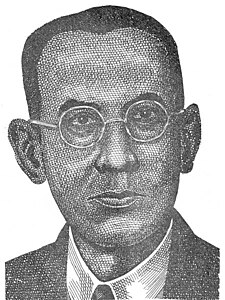
1893: Fernando Mamuri Maramág was born in Ilagan, Isabela. He was educated in the Philippine Normal School, and then transferred to the University of the Philippines. He worked as teacher at the Instituto de Manila, which later became the University of Manila. He was also writer and editor at several magazines, including Rising Philippines, Citizen, Philippine National Weekly, Philippines Herald, and The Tribune. He also served in the Publication Division of the Department of Justice, and then transferred to the office of the President of the Senate under Manuel L. Quezon. Si Fernando Maramag ay isa sa mga pinakamagagaling na manunulat na Pilipino. Nakilala siya sa larangan ng panulaan at pamamahayag. Naging editor siya ng The Manila Tribune.
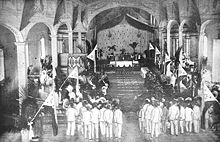
1898: The Malolos Constitution was promulgated. Two days later, the Philippine republic was inaugurated with Emilio Aguinaldo as president.
1899: The Malolos Constitution is declared in effect by Gen. Emilio Aguinaldo, the first President of the fledgling Philippine Republic; in less than a month, the Philippine-American War will be started by the US forces.
1987: Jay-R Siaboc (Eduardo Siaboc Jr. in real life) was born, he is a Filipino singer actor who hailed from Toledo City, Cebu. He was first recognized as runner-up to grand star dreamer Yeng Constantino in the very first season of ABS-CBN’s Philippine version of Pinoy Dream Academy (PDA).
Today in History : January 20th
On this date in...
1942: During World War II, Japan's Congress grants the Philippines the "honor of independence" on the condition that the Filipinos collaborate in the promotion of the Co-Prosperity Sphere.
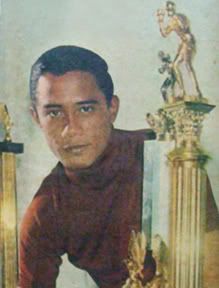
1947: Erbito Salavaria was a retired Filipino professional boxer who was born in Sta. Cruz, Manila, Philippines. He was known as the one of Asia’s best during the 70’s in the flyweight division.
1984: Toni Gonzaga was born in Taytay, Province of Rizal, Philippines. She is a Filipina commercial model, singer and an actress. She had been participating in various singing competitions since she was seven and finally entered the showbusiness at the age of thirteen when she became a contestant in a singing competition.
2001: the Supreme Court declared the presidency vacant. Arroyo was sworn in on the same day as the 14th president of the Philippines by Supreme Court Chief Justice Hilario Davide, Jr. In her speech before the people at EDSA, Arroyo reiterated the following principles that her administration will pursue: being bold in national ambition to win the fight against poverty; improve the moral standards of government and society to provide a strong foundation for good governance; change the politics of personality and patronage to a politics of to a new politics of party programs and process of dialogue with the people; promote leadership by example and solid traits such as work ethic and a dignified lifestyle, matching action to rhetoric, and performing rather than grandstanding; pursue an economic philosophy of transparency and private enterprise and extend the opportunities to the rural countryside.
Labels:
1942,
1947,
1984,
2001,
Erbito Salavaria,
Gloria Arroyo,
January,
January 20th,
Japan,
Supreme Court,
Toni Gonzaga,
World War II
Today in History : January 19th
On this date in...
1886: Voluntary migration of natives to the Philippine island of Palawan is encouraged by a royal decree issued by the Spanish colonial king; incentives include exemptions from payments of tax and dues to public treasury, free passage, land gratis (three hectares), etc.
1982: UnionBank was formed as a government-owned commercial bank, the result of a merger between Union Savings and Mortgage Bank and Bancom Development Corporation, one of the leading development banks in the Philippines at the time and the parent of Union Savings and Mortgage.
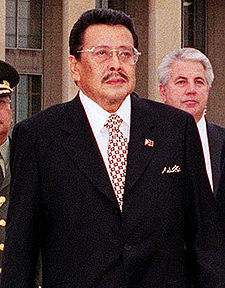
2001: the Armed Forces of the Philippines, seeing the political upheaval throughout the country, decided to withdraw its support from the president(Joseph Estrada) and transfer its allegiance to the vice president, Gloria Macapagal-Arroyo.
Today in History : January 18th
On this date in...
1899: The first issue of the Philippine revolutionary newspaper "Kalayaan" (Freedom) issue comes out; authored by Katipunan founder Andres Bonifacio & Emilio Jacinto, et al., the second issue will never reach circulation because the printing press will be discovered by the Spanish colonial authorities.
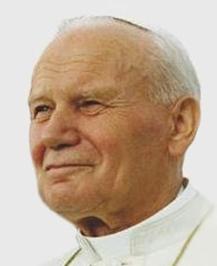
1995: Pope John Paul II offered mass to an estimated 4 to 5 million people at Luneta Park, Manila, Philippines, making it to the Guiness Book of World Records for the Biggest Papal Crowd.
Labels:
1899,
1995,
January,
January 18th,
John Paul II,
Kalayaan,
Katipunan,
Pope
Today in History : January 17th
On this date in...
1901: Philippine President on-the-guerrilla-run Emilio Aguinaldo issues a manifesto condemning the atrocities of imperialist Americans during the Philippine-American War.
1981: Marcos officially lifted martial law. However, he retained much of the government's power for arrest and detention. Corruption and nepotism as well as civil unrest contributed to a serious decline in economic growth and development under Marcos, whose health declined due to lupus.
Labels:
1901,
1981,
Emilio Aguinaldo,
Ferdinand E. Marcos,
January,
January 17th,
Martial Law
Today in History : January 16th
On this date in...
1967: The Southeast Asian Fisheries Development Center (SEAFDEC)was established. SEAFDEC is currently made up of 11 Member Countries, namely Brunei Darussalam, Cambodia, Indonesia, Japan, Lao PDR, Malaysia, Myanmar, the Philippines, Singapore, Thailand and Vietnam; and has the Council of Directors, composed of nominees from Member Countries, as policy-making body to provide directives and guidance on activities of the Center.
1981: The Lung Center of the Philippines which provides health care specifically on lung and pulmonary diseases, was established in Quezon City by President Ferdinand E. Marcos under Presidential Decree No. 1823.
1899: The members of the first Philippine Commission were appointed by President William McKinley. Also known as the Schurman Commission, it was composed of Jacob Schurman as chairman and George Dewey, Elwell Otis, Dean Worcester, and Charles Denby as members.
2007: Jainal Antel Sali, Jr., leader of Abu Sayyaf A.K.A. Abu Solaiman, Abu Solajman, Abu Sulaiman, Abu Sulayman, and Jainal Antal Sali, Jr., was killed during a gunfight with Armed Forces of the Philippines Airborne Special Forces soldiers in a village about 590 miles south of Manila. Local villagers and Sali's wife identified his body.
Subscribe to:
Posts (Atom)
NGAYON SA KASAYSAYAN NG PILIPINAS
(TODAY IN HISTORY OF THE PHILIPPINES)because history is the key to the future...