Showing posts with label 2006. Show all posts

Today in History : February 26th

On this date in...

1893: Andres Bonifacio, founder of the Philippine revolutionary movement KKK, enjoins all the district heads of the secret revolutionary society Kataas-taasang, Kagalang-galangang Katipunan ng mga Anak ng Bayan (KKK) to collect the required fees from all the members as soon as possible, the money then to be sent to the treasurer of the Association; Bonifacio was then the fiscal and comptroller of the KKK.


1941: The Philippine Air Lines was founded by a group of businessmen led by Andres Soriano, hailed as one of the Philippines' leading industrialists at the time, who served as its general manager, and former Senator Ramon Fernandez, who served as its chairman and president. The airline’s first flight took place on March 15, 1941 with a single Beechcraft Model 18 NPC-54 on daily services between Manila (from Nielson Field) and Baguio. On July 22, the airline acquired the franchise of the Philippine Aerial Taxi Company. Government investment in September paved the way for its nationalization.

2006: During the 13th Congress the Philippines was under a state emergency after the government claimed that it foiled an alleged coup d'état attempt against the administration of Philippine President Gloria Macapagal-Arroyo earlier that same day. Two days later, Manuel Roxas called on the government to immediately revoke Proclamation No. 1017, saying it betrays its own vision of a strong republic and directly attack Philippine democracy. Roxas voted in favor of the Revised Value-Added Tax Law when it was deliberated in the Senate. The law was co-authored by other Liberal Party members, Franklin Drilon and Francis Pangilinan. He also voted in favor of the abolition of the death penalty in the Philippines.

Today in History : February 19th

On this date in...

1888: Aurora Antonia Aragón de Quezon was born to Pedro Aragón and Zeneida Molina, in the town of Baler in Tayabas province. Aurora Antonia Aragón de Quezon , usually known simply as Aurora Quezon, and sometimes as Aurora Aragón-Quezon, was the wife of Philippine President Manuel Luis Quezon and the First Lady of the Philippines from 1935 to 1944. Though she is recognized as the second First Lady of the Philippines, she was actually the first spouse of a Philippine president to be called as such, the honorific being unknown during the presidency of Emilio Aguinaldo, and thus not applied at that time to his wife Hilaria.

1898: Filipina revolutionary and patriot Delfina Herbosa marries fellow Katipunero Jose Salvador Natividad; she is the niece of national hero Jose Rizal and, together with her future revolutionary general husband, fought various battles against the Spaniards during the Philippine Revolution. Delfina Herbosa helped Marcela Mariño Agoncillo in making the filipino flag in hongkong.

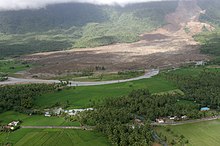
2006: A massive rock slide-debris avalanche occurred in the Philippine province of Southern Leyte that caused widespread damage and loss of life. The deadly landslide followed a ten-day period of heavy rains and a minor earthquake of magnitude 2.6 on the Richter scale. The official death toll stands at 1,126.

Today in History : February 12th

On this date in...

1901: Apolinario Mabini, Gen. Artemio Ricarte and other defiant revolutionary leaders who have been deported from the Philippines begin their exile in Guam; refusing to swear fealty to imperialist America, they form part of the handful of proud survivors of the Philippine Revolution and the Filipino-American War who stand out against the many who have given up the cause of independence for their native country.

1903: José Palma, a poet and soldier, died in Manila. He was born in Tondo, Manila, on June 3, 1876. He was the younger brother of Dr. Rafael Palma. Palma was also a staff member of La Independencia. He wrote Filipinas, a patriotic poem in Spanish, which became the lyrics of the Lupang Hinirang, the Philippine national anthem.

1998: With the approval of Republic Act No. 8491, the eagle and lion on the lower half of the shield were not specified, and therefore removed. However, the modified arms are not in wide use, pending the ratification of the law by a national referendum called for that purpose, as mandated by the Philippine Constitution.

2006: Your Song, a weekly musical anthology program of ABS-CBN, began its airing. It is broadcast Sundays afternoon. The plot of each episode is inspired by a hit song performed by a local artist. The song title is used as the episode title, while the song itself is used throughout the episode as background music. A new cast is featured in each episode.

Today in History : February 4th

On this date in...

1899: Hostilities broke out after two American privates on patrol killed three Filipino soldiers in San Juan, a Manila suburb. This incident sparked the Philippine-American War, which would cost far more money and took far more lives than the Spanish–American War. Some 126,000 American soldiers would be committed to the conflict; 4,234 Americans died, as did 16,000 Filipino soldiers who were part of a nationwide guerrilla movement of indeterminate numbers. At least 34,000 Filipinos lost their lives as a direct result of the war, and as many as 200,000 may have died as a result of the cholera epidemic at the war's end. Atrocities were committed by both sides.

2001: The town officially became a component city following the ratification of Republic Act 8990 authored by Pampanga Second district Rep. Oscar Rodriguez in a plebiscite from the previous day. Dr. Rey B. Aquino was the city's first mayor. The ratification of Republic Act 8990 made the City of San Fernando the 99th city of the Republic of the Philippines.

2006: About 30,000 people had gathered outside the PhilSports Stadium to participate in the first anniversary episode of the popular ABS-CBN early afternoon television game show, Wowowee. It was scheduled at 1 pm. The soccer stadium was supposed to be the viewing area of people who were not able to enter the basketball stadium, where the program was supposed to be staged. The size of the crowd was significantly larger than the usual 5,000 who attended previous recordings. At about 6 am, the stampede started when organizers of the show began handing out tickets to people in the crowd, many of whom had been camping outside the stadium for days to acquire them. The stampede killed 71 people and injured some 392 people. Most of the victims were middle-aged or elderly women.

Today in History : January 24th

On this date in...

1897: "The Cry of Tarlac" signals the spread of the Philippine Revolution in the Central Luzon province; it follows the initial "Cry of Pugadlawin" that launched the Filipinos' fight for independence from Spanish colonial rule.

1964: all the parties represented in this appeal signed a motion for settlement agreeing that the tax liability of $117,801.67 be paid from the Philippine assets. The Court of First Instance of Iloilo, Philippines, entered an order approving the agreement and directing that the tax be paid. Record, Exhibit B. Nevertheless, as a result of collateral litigation, the Philippine court temporarily enjoined payment.

2006: A Philippines air force pilot was missing Tuesday after a plane crashed near Manila en route to joint maneuvers with US forces, a military spokesman said. The twin-engine aircraft was carrying two officers including the missing pilot when it crashed in a commercial fishery shortly after takeoff from Sangley airbase, Major Augusto dela Pena said. The co-pilot parachuted to safety, he said, adding the cause of the crash was unknown. The US-made "Bronco," a mainstay of the Philippines' anti-insurgency operations, was heading to the former US Clark airfield north of Manila when the accident happened.

Today in History : January 22nd

On this date in...

1878: Britain leashes North Borneo from the Sultan of Sulu in the Philippines for $5,000 a year; the deal is part of the British government's bid to acquire greater control of the island and to protect and assist the North Borneo Chartered Company tasked to administer the internal affairs of the protectorate island.

1899: Tomas P. Arejola was appointed to the Malolos Congress, representing his home province of Ambos Camarines, but he remained in Spain and was not able to participate in its sessions. Somehow, however, his name appeared as one of the signatories to the Malolos Constitution, which was approved by the Congress on this day.

2006: ABS-CBN's broadcast of Solar Sports' "Hataw Pacquiao, Laban ng Bayan" became the 3rd most watched TV event in Philippine history[18] as AGB Nielsen Media Research showed that 2.073 million households (5.261 million individuals) watched the Pacquiao-Morales rematch compared to "Rosalinda"'s 1.486 million households (3.787 million individuals) of its July 13, 2000 episode

Today in History : January 15th

On this date in...

1913: The Department of Instruction authorized the reopening of the Primary Course after the Philippine Revolution ended Spanish sovereignty in the Philippines suspending the authorization to operate the Normal School. This was a trying time for the College. The intermediate and college levels soon followed. With the new organization enrollment grew and better times came.


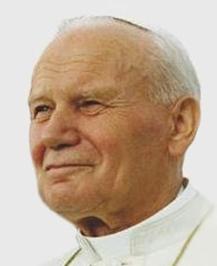
1995: A suicide bomber would dress up as a priest while John Paul II was in his motorcade on his way to visiting the Federation of Asian Bishops' Conference at the San Carlos Seminary, which is located along Edsa, Guadalupe, Makati City. The assassin would stick a bomb inside one of his sleeves of the robe. He would then use the disguise to get closer to the Pope, and detonate the bomb when Pope John Paul II would approach to kiss him. The planned assassination of the Pope was intended to divert attention from the next part of the phase. About 20 men had been trained by Yousef to carry out this act prior to January 1995.

2006: At least 16 people, most of them children, drowned when a packed wooden motorboat capsized during a religious parade on the central Philippine island of Leyte yesterday, a senior coast guard official said. Several people are missing and about 30 were rushed to hospitals in San Ricardo town after the accident during the Feast of Saint Nino, one of the most revered religious festivals in the mainly Roman Catholic country. “We’ve dispatched more search-and-rescue ships to the area,” coastguard commander Arthur Gosingan said. “We’re getting very sketchy reports. We have no idea how many people were on the boat when it capsized and sank near the wharf this morning.” He said officials feared the number of dead could rise. The Feast of Saint Nino, usually celebrated on the third Sunday of January, is one of the most colourful religious festivals in a country where Roman Catholicism blends with pre-colonial pagan ceremonies.

NGAYON SA KASAYSAYAN NG PILIPINAS

(TODAY IN HISTORY OF THE PHILIPPINES)because history is the key to the future...