Showing posts with label 1946. Show all posts

Today in History : March 28th

On this date in...

1901: General Emilio Aguinaldo arrives in Manila on the Vicksburg from Palanan, Isabela, a prisoner of Colonel Frederick Funston.

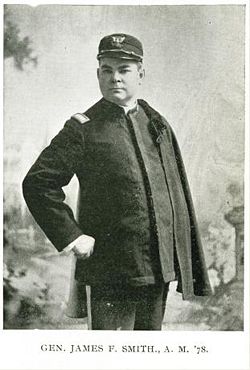
1907: Governor James F. Smith certifies that since the publication of the Philippine Census in 1905 there have been no serious disturbances of the public order save those committed by outlaws and religious fanatics and that the great mass of the Filipinos have been “law-abiding, peaceful and loyal to the United States.” The President of the United States is then formally requested to authorize the Philippine Commission to call a general election to choose delegates to the Philippine Assembly.

1946: Manuel A. Roxas is reported to have declared in Cebu that there is danger of revolution after independence if the people’s faith in the government is undermined.

Today in History : March 21st

On this date in...

1568: Rajah Tupas, of Cebu, is converted to the Catholic religion. At the age of 70, he is baptized by Father Diego Herrera, Augustinian, and receives the name of Felipe, in honor of King Philip II. Rajah Tupas was the Rajah (King) of Cebu in the Philippines. He was the son of Sri Parang the Limp, and the nephew of Rajah Humabon.


1901: The Department of Public Instruction, Department of Education,  is created. It proposes the establishment of public schools in every town in the islands, a normal school and a trade school at Manila, and an agricultural school.

1942: General Jonathan Wainwright takes over the command of the U.S. forces in the Philippines. Jonathan Mayhew "Skinny" Wainwright IV was a career American army officer and the commander of Allied forces in the Philippines at the time of their surrender to the Empire of Japan during World War II. Wainwright is a recipient of the Medal of Honor.

1946: After reviewing the decision of the military commission in Manila which sentenced Lieutenant-General Masaharu Homma to death by firing squad, General Douglas MacArthur orders Lieutenant –General W.D. Styer to carry out the verdict.

1958: General Aguinaldo, as guest of an American naval officer, rides a helicopter to witness “Operations Bulwark One,” a set of naval exercises by the combined U.S. and Philippine naval units off Corregidor.

Today in History : March 19th

On this date in...

1731: Birth of Gabriela Silang, heroine of the Ilocos Revolt, wife of Diego Silang in Caniogan, Ilocos Sur. María Josefa Gabriela Cariño Silang or simply known sa Gabriela Silang was the first Filipino woman to lead a revolt during the Spanish colonization of the Philippines. An active member of the insurgent force of Diego Silang, her husband, she led the group for four months after his death before she was captured and executed.

1946: Catanduanes, formerly a part of Albay, is inaugurated as a separate province by virtue of Act. No. 687. Catanduanes is located in the Bicol Region in Luzon. Catanduanes' capital is Virac and the province lies to the east of Camarines Sur across Maqueda Channel. As of 2007, the population of the province is 232,757.

Today in History : March 16th

On this date in...

1521: Ferdinand Magellan discovered the Philippines where he landed in Samar. Magellan was a Portuguese explorer and was born at Sabrosa, in northern Portugal, but later obtained Spanish nationality in order to serve king Charles I of Spain in search of a westward route to the "Spice Islands".

1705: The Sultan of Jolo, as a token of friendship, writes a letter to Governor-General Zalbálburu informing him that he has chosen to cede to the Spanish Crown his possessions on the island of Paragua, now as Palawan, including the neighboring isle of Lauag, Balabac.

1946:The remains of a number of prominent Filipinos, victims of Japanese Atrocities including Juan M. Elizalde, Enrico Pirovano, Rafael Roces, Jose Mañosa Ozamis, and Virgilio Lobregat, are found in a common grave at the Chinese cemetery.

1900: The Second Philippine Commission, aslo known as Taft Commission, was appointed by McKinley and headed by William Howard Taft, was granted legislative as well as limited executive powers

2001: Two owners of Ozone Disco, Ramon NG and Hermilo Ocampo get 4-year jail term and a fine of P20 million after they were declared guilty of “reckless imprudence” resulting to 160 deaths and 195 injuries after a fire erupted on the said disco house on 18 March 1996. The two are also ordered to pay P150, 000 in death indemnity and damages to the families of fatalities and P100, 000 to those who were injured.

Today in History : March 15th

On this date in...

1872: Governor-General Rafael de Izquierdo creates the Telegraph Practical School. Telegraphy is the long-distance transmission of written messages without physical transport of letters. It is a compound term formed from the Greek words tele (τηλε) = far and graphein (γραφειν) = write. Radiotelegraphy or wireless telegraphy transmits messages using radio. Telegraphy includes recent forms of data transmission such as fax, email, telephone networks, and computer networks in general.

1899: General Mariano Trias submits to President Aguinaldo the report of the Commission of Investigation on the incident at San Juan Bridge on February 4, 1899. The Commission concludes that the Americans were the first to fire and that their attack had been premeditated.

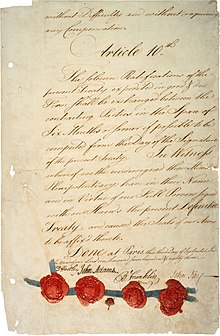
1900: Manila officials do what they can to carry out the provisions of the treaty of Paris. Spanish officers about to be returned to Spain are urged to take their Filipino wives with them. The Treaty of Paris, signed on 3 September 1783, ratified by the Congress of the Confederation on 14 January 1784 and by the King of Great Britain on 9 April 1784, formally ended the American Revolutionary War between the Kingdom of Great Britain and the United States of America, which had rebelled against British rule.

1912: End of the term of William Cameron Forbes as governor-general of the Philippines. He was the son of William Hathaway Forbes, president of the Bell Telephone Company, and wife Edith Emerson, a daughter of Ralph Waldo Emerson, nephew of James Grant Forbes and grandson of Francis Blackwell Forbes. After graduating from Harvard in 1892, he embarked on a business career, eventually becoming a partner in J. M. Forbes and Company.

1946: A scroll commemorating “the brave fight of the Filipino people for liberty” and signed by thousands of war-bond purchasers in the city of Washington, D.C., U.S.A., is handed to Paul V. McNutt for delivery to the Philippines. --President Sergio Osmeña places the Military Police Command of the Philippine Army under the Secretary of the Interior.

1963: President Macapagal directs Budget Commissioner Faustino Sy-Changco to release the amount of P6 million for the purchase of the Tatalon Estate in Quezon City.

Today in History : March 12th

On this date in...


1907: The Partido Independiente Immediata and Union Nacionalista are fused into the Nacionalista Party.
1946: President Sergio Osmeña creates the National Urban Planning Commission to coordinate the reconstruction and development of urban areas throughout the Philippines.


2001: Paduka Mahasari Maulana al Sultan Esmail D. Kiram is proclaimed new sultan of Sulu and North Borneo at the Sulu State College upon the recommendation of the Ruma Bichara and the Council of Datus. Paduka Mahasari Maulana al Sultan Esmail D. Kiram is proclaimed new sultan of Sulu and North Borneo at the Sulu State College upon the recommendation of the Ruma Bichara and the Council of Datus. He is the 37th in an unbroken line of succession beginning with Sharif-al-Hashim in 1450.

Today in History : March 11th

On this date in...

1565: Miguel López de Legazpi reaches Camiguin from Limasawa. Legaspi, also known as El Adelantado (The Governor) and El Viejo (The Elder), was a Spanish conquistador who established one of the first European settlements in the East Indies and the Pacific Islands in 1565. After obtaining peace with various indigenous tribes, López de Legazpi made the Philippines the capital of the Spanish East Indies in 1571.

1576: Juan de Salcedo, “the Hernan Cortes of the Philippines,” dies at Vigan. Juan de Salcedo was a Spanish conquistador. He was born in Mexico in 1549 and he was the grandson of Miguel López de Legazpi and brother of Felipe de Salcedo. Salcedo was one of the soldiers who accompanied the Spanish colonization of the Philippines in 1565.

1876: A protocol signed by England and Germany recognizes Spanish rights to the Tawi-Tawi group and the chain of islands stretching from Sulu to Borneo.

1876: A Supreme Court is established in the City of Cebu. Cebu is a province in the Philippines, consisting of Cebu island and 167 surrounding islands. It is located to the east of Negros, to the west of Leyte and Bohol islands.

1892: A royal decree is issued creating the Superior Normal School for Women Teachers in Manila under the direction of the Augustinians. University of Wisconsin–Superior is it's name today.

1898: General Emilio Aguinaldo appoints General Ambrosio Flores as quarter master for the armed forces of the Philippine Revolutionary government.

1899: Premier Mabini sends telegrams to the municipal and military chiefs of the provinces along the coasts instructing them to admit foreign merchant ships which might want to take loads of merchandise. --Desultory firing occurs at San Pedro Makati and caloocan. Filipinos are driven from a trench they have begun to construct. A War Department order withraws permission for families of officers and enlisted of officers and enlisted men to accompany troops to Manila.

1942: General Douglas MacArthur and his family leave Corregidor for Australia.

1945: Romblon and Zamboanga are occupied by the Americans in World War II.

1946: Col. Akira Nagahama, terror of Fort Santiago and head of the kempeitai during the latter part of the Japanese occupation, is found guilty and sentenced to death by hanging by the U.S. military tribunal.

1947: The Filipino people, headed by Manuel A. Roxas, ratifies the nation-wide plebiscite on the “Parity Amendment” to the Constitution. This gives the Americans and Filipinos equal rights in the exploitation of the natural resources of the Philippines.

1988: To counteract the threat of war in Mindanao, the government creates the Regional Consultative Commission. The commission is given the task to draft a charter for an autonomous region in Mindanao. The body is composed of 55 members, 27 from electoral districts in Mindanao and 28 others chosen by President Aquino. The secretariat is based in Zamboanga City.

Today in History : February 14th

On this date in...

1935: Upsilon Phi Sigma (YΦΣ, commonly known as UPS) is Founded at the University of the Philippines Los Baños. UPS is a National Inter-University and Collegiate Fraternity and Sorority with 164 active chapters. It is one of the oldest fraternities and sororities in the Philippines.

1939: Philippine president Manuel L. Quezon proclaimed his social justice program before a gathering of farmers in front of the Municipal Government building of San Fernando.

1946: PAL resumed operations after a five-year hiatus with service to 15 domestic points with five Douglas DC-3s and a payroll of 108 names. Philippine Airlines returned to its original home, the Nielson Airport in Makati. The airport, heavily damaged during the war, was refurbished and modernized by PAL at a hefty cost of over one million pesos, quickly becoming the official port of entry for air
passengers into the Philippines.
The airport was operated by Manila International Air Terminal, Inc., a wholly-owned PAL subsidiary.

1952: Filipino revolutionary leader from Albay, Simeon A. Ola, dies at a ripe old age of 86; Ola was a fervent revolutionary leader who persisted in fighting despite the imperialists' superior firepower and combat training--thus inspiring more patriots to join his army during the Filipino-American War for several years

1970: John Carlos G. De los Reyes, better known as JC De los Reyes was born. JC is a councilor in Olongapo City, Philippines and standard-bearer of the Ang Kapatiran Party (AKP) in the 2010 Philippine presidential elections.

1986: Parties of the opposition, the UNIDO and LABAN, begin protest rallies against the election results as they are convinced that massive fraud has been committed. Corazon Aquino calls for a boycott of all establishments closely associated with the administration.

1998: President Fidel Ramos signed Republic Act No. 8526, converting the Municipality of Valenzuela under the administration of Mayor Bobbit L. Carlos into a highly urbanized city, making Valenzuela the 12th city in Metro Manila and the 83rd in the Philippines.

Today in History : February 1st

On this date in...

1814: The most destructive eruption of Mayon Volcano occurred. Lava flowed but not as much compared to the 1766 eruption. Instead, the volcano was belching dark ash and eventually bombarding the town with tephra that buried the town of Cagsawa—only the bell tower of the town's church remained above the new surface. 2,200 Albay locals perished in what is considered to be the most lethal eruption in Mayon's history.

1902: The Philippine Commission enacted Act. No. 345, which set December 30 of each year as Rizal Day, and made it one of the ten official holidays of the Philippines.

1946: Victor Wood was born in Buhi, Camarines Sur, Philippines[citation needed] to Sgt. Kocky Wood and Rosario "Tiyang Saring" Nobleza. His mother was well known in Buhi and neighboring towns for selling herbal medications and perfumes. Victor "Vic" Wood is a Filipino singer dubbed as the "Jukebox King of the 70s". He was popular for 'covering' songs such as Mr. Lonely, Wooden Heart, I'm Sorry My Love and Sincerely, among others.

1963: Jose Ma. Panganiban was born in Mambulao, Camarines Norte, a town which was subsequently renamed after him. His parents were Vicente Panganiban, originally from Hagonoy, Bulacan, and Juana Enverga. Jose Ma. Panganiban y Enverga was a propagandist whose life was tragically cut short, an event that caused great mourning in the Filipino community in Madrid. He wrote articles for La Solidaridad, under the pen names "Jomapa" and "J.M.P."

NGAYON SA KASAYSAYAN NG PILIPINAS

(TODAY IN HISTORY OF THE PHILIPPINES)because history is the key to the future...