Showing posts with label 1945. Show all posts

Today in History : March 27th

On this date in...

1945: Cebu City is taken by the American forces. Cebu City is the capital city of Cebu and the second city in the Philippines, the second most significant metropolitan centre in the Philippines and known as the oldest city in the country.

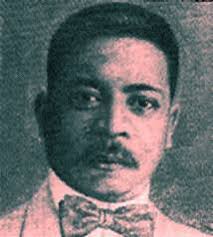
1903: In answer to General Luciano San Miguel’s request for advice, Mabini, newly-returned from exile in Guam, asks him to cease his revolutionary activities in the interest of peace and order.

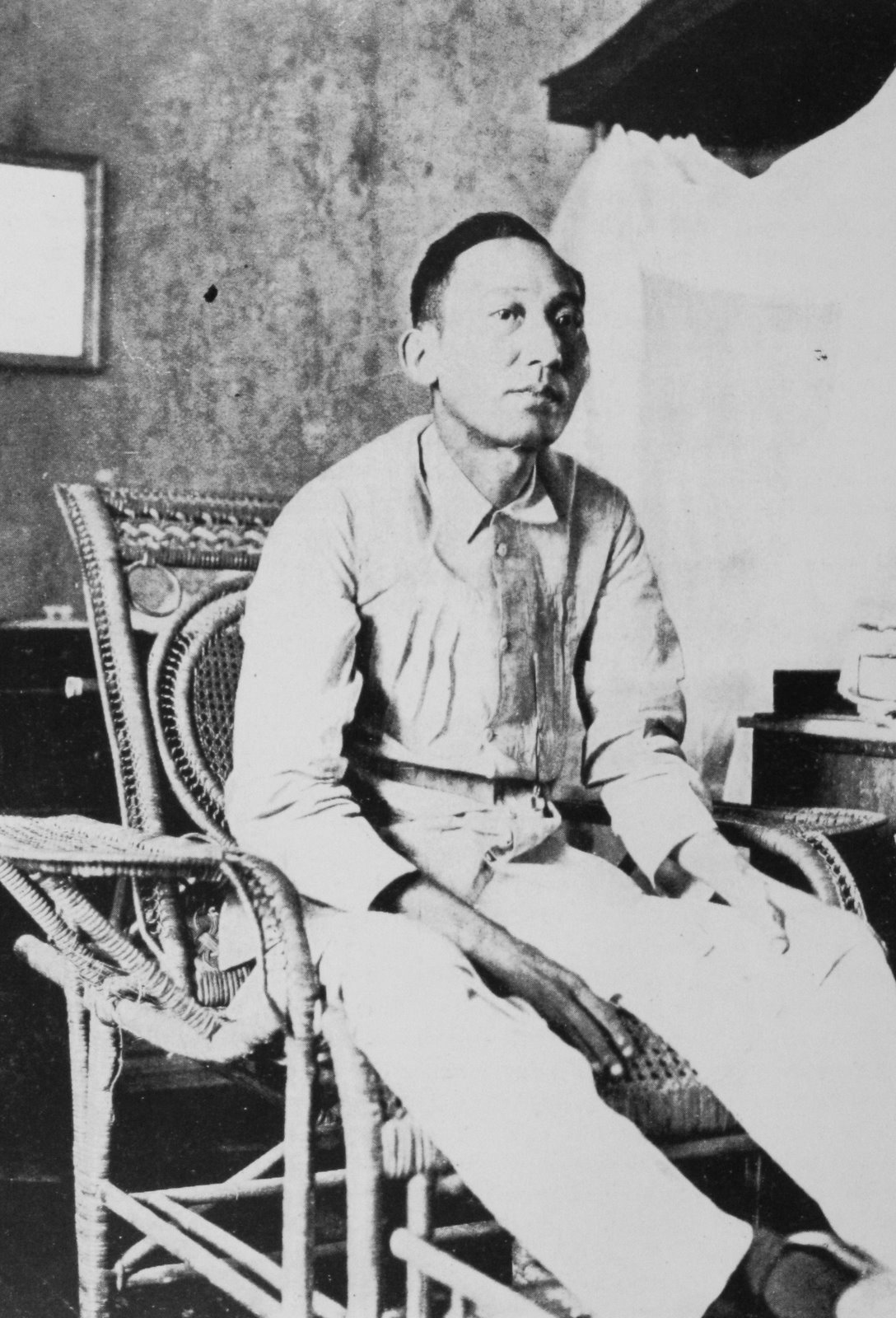
1900: General Jose Ignacio Paua surrenders to the American Forces. Jose Ignacio Paua was a Chinese ironsmith who was appointed a general by President Emilio Aguinaldo in 1896. He was the only foreigner who signedthe Biak-na-Bato constitution. He was introduced to Emilio Aguinaldo and Artemio Ricarte by his best friend General Pantaleon Garcia.

Today in History : March 18th

On this date in...

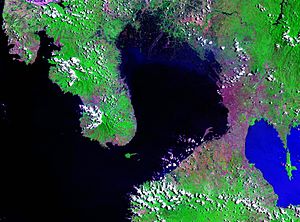
1945: Panay is invaded by the American forces. Panay is located in the western part of the Visayas. Politically, it is divided into five provinces: Aklan, Antique, Capiz, Iloilo, and Guimaras, all in the Western Visayas Region. It is located southeast of the island of Mindoro and northwest of Negros, separated by the Guimaras Strait. Between Negros and Panay Islands lie the island-province of Guimaras. To the north is the Sibuyan Sea and the islands of Romblon; to the southwest is the Sulu Sea and the Panay Gulf.

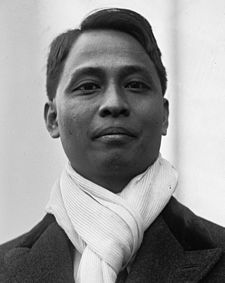
1957: Vice-President Carlos P. Garcia is sworn in as President of the Philippines. Incumbent President Carlos P. Garcia won his opportunity to get a full term as President after the untimely death of Ramon Magsaysay in a plane crash. His running mate, Senator Jose Laurel, Jr. lost to Pampanga Representative Diosdado Macapagal. This was the first time in Philippine electoral history where a president was elected by a plurality and not majority, and in which the president and vice president came from different parties.

Today in History : March 11th

On this date in...

1565: Miguel López de Legazpi reaches Camiguin from Limasawa. Legaspi, also known as El Adelantado (The Governor) and El Viejo (The Elder), was a Spanish conquistador who established one of the first European settlements in the East Indies and the Pacific Islands in 1565. After obtaining peace with various indigenous tribes, López de Legazpi made the Philippines the capital of the Spanish East Indies in 1571.

1576: Juan de Salcedo, “the Hernan Cortes of the Philippines,” dies at Vigan. Juan de Salcedo was a Spanish conquistador. He was born in Mexico in 1549 and he was the grandson of Miguel López de Legazpi and brother of Felipe de Salcedo. Salcedo was one of the soldiers who accompanied the Spanish colonization of the Philippines in 1565.

1876: A protocol signed by England and Germany recognizes Spanish rights to the Tawi-Tawi group and the chain of islands stretching from Sulu to Borneo.

1876: A Supreme Court is established in the City of Cebu. Cebu is a province in the Philippines, consisting of Cebu island and 167 surrounding islands. It is located to the east of Negros, to the west of Leyte and Bohol islands.

1892: A royal decree is issued creating the Superior Normal School for Women Teachers in Manila under the direction of the Augustinians. University of Wisconsin–Superior is it's name today.

1898: General Emilio Aguinaldo appoints General Ambrosio Flores as quarter master for the armed forces of the Philippine Revolutionary government.

1899: Premier Mabini sends telegrams to the municipal and military chiefs of the provinces along the coasts instructing them to admit foreign merchant ships which might want to take loads of merchandise. --Desultory firing occurs at San Pedro Makati and caloocan. Filipinos are driven from a trench they have begun to construct. A War Department order withraws permission for families of officers and enlisted of officers and enlisted men to accompany troops to Manila.

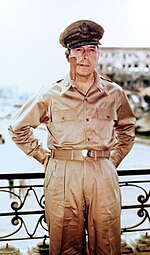
1942: General Douglas MacArthur and his family leave Corregidor for Australia.

1945: Romblon and Zamboanga are occupied by the Americans in World War II.

1946: Col. Akira Nagahama, terror of Fort Santiago and head of the kempeitai during the latter part of the Japanese occupation, is found guilty and sentenced to death by hanging by the U.S. military tribunal.

1947: The Filipino people, headed by Manuel A. Roxas, ratifies the nation-wide plebiscite on the “Parity Amendment” to the Constitution. This gives the Americans and Filipinos equal rights in the exploitation of the natural resources of the Philippines.

1988: To counteract the threat of war in Mindanao, the government creates the Regional Consultative Commission. The commission is given the task to draft a charter for an autonomous region in Mindanao. The body is composed of 55 members, 27 from electoral districts in Mindanao and 28 others chosen by President Aquino. The secretariat is based in Zamboanga City.
Today in History : February 16th

On this date in...

1945: United States troops land on the Bataan Peninsula, Philippines in the bid to recapture the former American colony during World War II; the Southeast Asian country, colonized by America at the turn of the 19th century, was invaded by Japan in 1941.

1986: Arturo Modesto Tolentino became the Vice President of the Philippines. His, however, was a short-lived tenure and without actual exercise of power and authority. The allegedly fraudulent outcome would eventually lead to the People Power Revolution which ousted Marcos and installed Aquino as president.

Today in History : February 10th

On this date in...

1763: The Seven Years War was ended by the Peace of Paris. At the time of signing the treaty, the signatories were not aware that the Philippines had been taken by the British and was being administered as a British colony. Consequently no specific provision was made for the Philippines. Instead they fell under the general provision that all other lands not otherwise provided for be returned to the Spanish Crown.

1945: Manuel C. Colayco, Filipino "liberation hero" dies after a hand grenade explodes in front of the University of Santo Tomas' main gate where he was pointing out to his fellow guerrilla soldiers the strategic spots and important buildings in the campus; Colayco's group was leading the rescue operations to free Filipino and Americans being held captive by the Japanese in UST during World War II.

Today in History : January 31st

On this date in...

1916: Act No. 2572 was passed witch merged the Philippine Library with two other government institutions: the Division of Archives, Patents, Copyrights and Trademarks (later to become the National Archives, the Copyright Office of the National Library and the Intellectual Property Office) and the Law Library of the Philippine Assembly, forming the Philippine Library and Museum.

1945: Josefa Llanes Escoda, founder of the Girl Scout of the Philippines, is executed together with other Filipinos who have resisted Japanese Occupation during World War II.

Today in History : January 3rd

On this date in...

1922: Manuel Artigas y Cuerva, a Filipino-Spanish biographer, bibliographer, historian, and journalist, is reappointed as acting director of the Philippine Public Library; he published a number of works that proved to have documentary/historical value.

1945: Gen. MacArthur is placed in command of all U.S. ground forces and Adm. Nimitz in command of all naval forces in preparation for planned assaults against Iwo Jima, Okinawa and Japan itself.

1949: The Bangko Sentral ng Pilipinas (BSP) is the central bank of the Republic of the Philippines was established. It was rechartered on July 3, 1993, pursuant to the provisions of the 1987 Philippine Constitution and the New Central Bank Act of 1993. BSP is the country’s central monetary authority.

Today in History : January 2nd

On this date in...

1899: Apolinario Mabini is appointed Prime Minister to lead the Mabini Cabinet of the First Philippine Republic (which will be inaugurated on January 23, 1899).

1942: General MacArthur declared the capital city, Manila, an open city to prevent its destruction, which he accomplished himself in 1945 while Japanese troops occupy Manila.

NGAYON SA KASAYSAYAN NG PILIPINAS

(TODAY IN HISTORY OF THE PHILIPPINES)because history is the key to the future...