Showing posts with label 1947. Show all posts

Today in History : March 11th

On this date in...

1565: Miguel López de Legazpi reaches Camiguin from Limasawa. Legaspi, also known as El Adelantado (The Governor) and El Viejo (The Elder), was a Spanish conquistador who established one of the first European settlements in the East Indies and the Pacific Islands in 1565. After obtaining peace with various indigenous tribes, López de Legazpi made the Philippines the capital of the Spanish East Indies in 1571.

1576: Juan de Salcedo, “the Hernan Cortes of the Philippines,” dies at Vigan. Juan de Salcedo was a Spanish conquistador. He was born in Mexico in 1549 and he was the grandson of Miguel López de Legazpi and brother of Felipe de Salcedo. Salcedo was one of the soldiers who accompanied the Spanish colonization of the Philippines in 1565.

1876: A protocol signed by England and Germany recognizes Spanish rights to the Tawi-Tawi group and the chain of islands stretching from Sulu to Borneo.

1876: A Supreme Court is established in the City of Cebu. Cebu is a province in the Philippines, consisting of Cebu island and 167 surrounding islands. It is located to the east of Negros, to the west of Leyte and Bohol islands.

1892: A royal decree is issued creating the Superior Normal School for Women Teachers in Manila under the direction of the Augustinians. University of Wisconsin–Superior is it's name today.
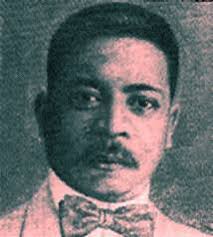
1898: General Emilio Aguinaldo appoints General Ambrosio Flores as quarter master for the armed forces of the Philippine Revolutionary government.
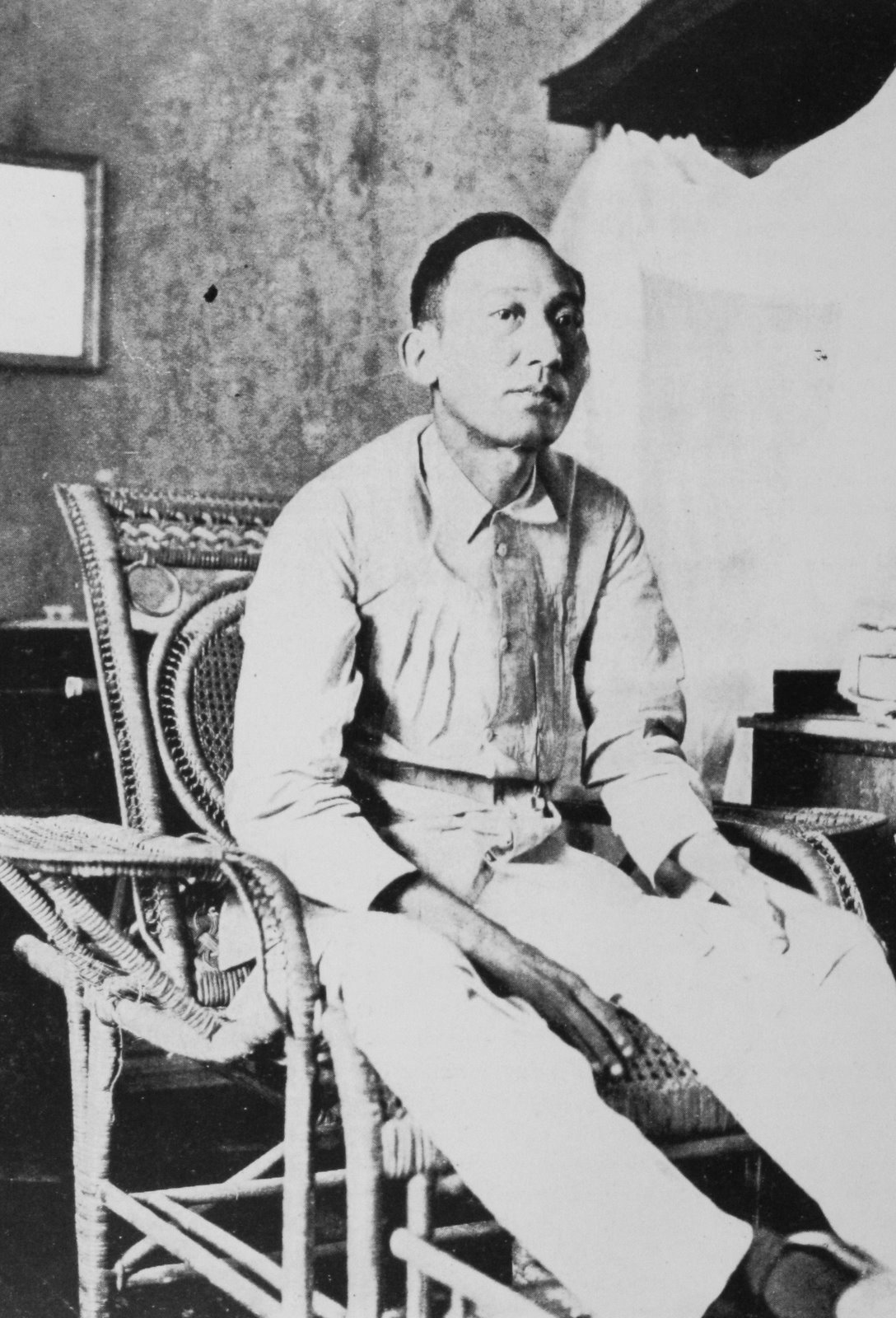
1899: Premier Mabini sends telegrams to the municipal and military chiefs of the provinces along the coasts instructing them to admit foreign merchant ships which might want to take loads of merchandise. --Desultory firing occurs at San Pedro Makati and caloocan. Filipinos are driven from a trench they have begun to construct. A War Department order withraws permission for families of officers and enlisted of officers and enlisted men to accompany troops to Manila.

1942: General Douglas MacArthur and his family leave Corregidor for Australia.

1945: Romblon and Zamboanga are occupied by the Americans in World War II.

1946: Col. Akira Nagahama, terror of Fort Santiago and head of the kempeitai during the latter part of the Japanese occupation, is found guilty and sentenced to death by hanging by the U.S. military tribunal.
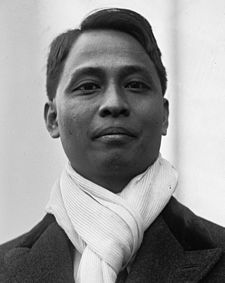
1947: The Filipino people, headed by Manuel A. Roxas, ratifies the nation-wide plebiscite on the “Parity Amendment” to the Constitution. This gives the Americans and Filipinos equal rights in the exploitation of the natural resources of the Philippines.

1988: To counteract the threat of war in Mindanao, the government creates the Regional Consultative Commission. The commission is given the task to draft a charter for an autonomous region in Mindanao. The body is composed of 55 members, 27 from electoral districts in Mindanao and 28 others chosen by President Aquino. The secretariat is based in Zamboanga City.

Today in History : March 10th

On this date in...

1583: Death of Governor-General Gonzalo Ronquillo de Peñalosa, founder of Nueva Caceres in 1582. His first official action was to order Manila to become Philippines's political and economic capital in 1582. That same year, he established the Palacio del Gobernador (Governor's Palace) in Intramuros, Manila to integrate all governmental activities in the Philippines.

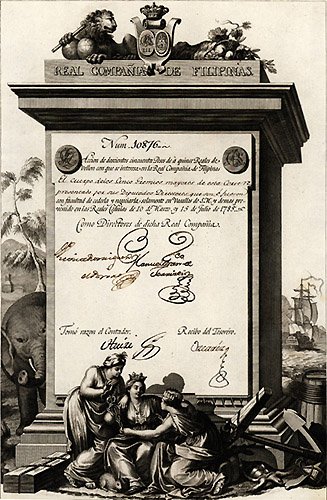
1785: The Real Compañia de Filipinas is established with a capital stock of P8,000,000 in 32,000 shares of P250 each. Its chief objective is to open commercial relations among the different colonies of Spain.

1820: King Ferdinand VII issues his famous manifesto proclaiming the re-establishment of the Cortes and the restoration of the Constitution of 1812.

1869: Birth of Macario Adriatico, lawyer, legislator, orator, scholar, journalist, and editor of La Independencia, in Calapan, Mindoro. He also helped liberate Romblon from the colonizers, and became Comandante de Estado Mayor of the Filipino Army in Panay at the dawn of the Filipino-American War until 1901. As a writer, Adriatico had contributed many of his works to several publications, and edited the Partido Conservador's Diario de Filipinos in 1907. Died on April 14, 1919.

1892: The lodge Nilad, which was established by Pedro Serrano Laktaw and Antonio Luna, is recognized by the Gran Oriente Español, the Spanish mother lodge.
1899: The U.S. transport Grant, with Major-General Henry Lawton, the Fourth Infantry, and a battalion of the Seventeenth Infantry aboard, arrives in Manila. The Council of Government agrees with the Permanent Commission of Congress to establish a Supreme Court in the capital of the Republic “because the cases are pilling up for lack of judges to try them.”

1900: President Emilio Aguinaldo issues a proclamation making it “a grave crime against the sovereignty of the Philippine Republic” for friars and other foreign priests, illegally holding ecclesiastical office of the Philippines, to ask the government of the U.S., at war with the Philippine Republic, to re-establish the ecclesiastical order that existed in the country before the Revolution.

1901: Don Isabelo de los Reyes’ periodical, Filipinas Ante Europa, publishes General Emilio Aguinaldo’s general order regulating the exchange of prisoners of war with the Americans and treating as traitors the partisans of the Federal party.

1917: Batangas was formally founded as one of the Philippines's earliest encomiendas. Batangas is one of the most popular tourist destinations near Metro Manila. The province has many beaches and famous for excellent diving spots only a few hours away from Manila. Some of the more notable ones are Anilao in the Municipality of Mabini, Matabungkay in the Municipality of Lian, Punta Fuego in the Municipality of Nasugbu, the Municipality of Calatagan and Laiya in the Municipality of San Juan.

1947: President Manuel A. Roxas narrowly escapes death during a “Parity” rally at Plaza Miranda, Quiapo, Manila. Julio C. Guillen, a barber, hurls a hand grenade on the platform immediately after the President delivers a speech.

Today in History : March 8th

On this date in...

1565: Felipe Salcedo takes possession of the island of Leyte. Felipe de Salcedo was a Spanish explorer who was a member of the López de Legazpi expedition to the Philippines in the 16th century. He accompanied his brother Juan de Salcedo and grandfather Miguel López de Legazpi in 1564 for their colonization of the East Indies and the Pacific. He commanded 1 ship, out of 5 fleets that sailed from Mexico to the Philippines.
1860: Birth of Antonio San Agustin, businessman, one of the “Thirteen Martyrs of Cavite,” in San Roque, Cavite. Antonio was a scion of a wealthy family. He studied at Letran College and University of Santo Tomas. He was married to Juliana Reyes. He owned the only bookstore, La Aurora, in the town which was used as a meetingplace by the Katipunan. Died on September 12, 1896.

1897: The Bishop of Vigan designates Fray J. Florentino Fernandez, a Dominican, the first Parish priest of Peñablanca, Cagayan.

1899: A citizenship certificate is made obligatory for all those holding official posts, entering into public or private contracts, registering and collecting remittances, salaries and pensions.

1901: From Palanan, President Emilio Aguinaldo instructs Apolinario Mabini to thank General Arthur MacArthur on his (Aguinaldo’s) behalf for the invitation extended to him to live in Malacañang Palace and to say that the Filipinos who have taken up arms have no other desire except Philippine independence.

1904: Artemio Ricarte y Garcia and an old friend, Aurelio Tolentino, write a long letter to Governor Wright setting forth their aspirations: the founding of a Filipino Republic.

1947: President Manuel Roxas, foremost leader of the Liberal Party, leaves for the southern provinces to campaign for the acceptance of the Parity Rights Bill.

Today in History : March 7th

On this date in...

1793: The Conciliar Seminary of Naga, Diocese of Nueva Caceres, founded by Dominican Bishop Msgr. Domingo Collantes is inaugurated. In time, the Spanish city and the native village merged into one community and became popularly known as Nueva Cáceres, to distinguish it from its namesake in Spain. It had a city government as prescribed by Spanish law, with an ayuntamiento and cabildo of its own. At the beginning of the 17th century, there were only five other ciudades in the Philippines. Nueva Cáceres remained the capital of the Ambos Camarines provinces and later of the Camarines Sur province until the formal creation of the independent chartered city of Naga under the Philippine Republic.


1820: Spanish ports are opened to Philippine trade and commerce and Philippine goods are granted preferential entry for a period of ten years.

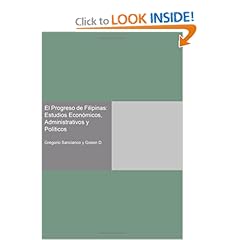
1852: Birth of Gregorio Sanciangco y Gozon, lawyer, writer, economist. Gregorio Gozon Sanciangco wrote “El Progreso De Filipinas” which advocated reforms in the political, administrative, agrarian, revenues, property, natural resources and urban development and taxation. Died on November 27, 1897.

1867: Birth of Tomas Remigio, Katipunan leader and revolutionary hero. Tomas Remigio a secretary of "Mayon" which was a branch of La Liga Filipina and used the pseudonym "Malingap". Died on August 1, 1916.

1898: The revolutionalists of Zambales besiege the cable station at Bolinao and seize the telegraphic line between that town and Manila. Filipino rebels attack Balincaguin, Pangasinan, and dislodge the Spanish defenders from their positions. The town of Anda, Pangasinan, also takes up arms and imprisons the Spanish curate.

1899: Apolinario Mabini writes Emilio Aguinaldo that Antonio Luna has submitted his irrevocable resignation as Chief of Operations. The Philippine Republic approves a “Provisional Law on the Judiciary” and a “Pension Law for War Widows, Orphans, and Disabled Officers.” The Twentieth regular Infantry takes part in an attack led by General Hale’s brigade, on several thousand Filipinos near the Pasig River. General Hale withdraws to the positions he occupied in the morning and the Filipinos follow in force, reoccupying lost ground.

1901: In Palanan, President Emilio Aguinaldo receives a letter from Mabini in Manila dated November 22, 1900, transmitting messages from US General Arthur MacArthur and J.F. Bell to the effect that independence cannot be granted, and that Aguinaldo should return to Manila and live in Malacañang Palace with MacArthur. Mabini asks Aguinaldo whether he should plead for independence or for autonomy, now that McKinley has been re-elected.

1947: Leaders of the Nacionalista Party, such as Camilo Osias, Jose P. Laurel, Tomas Confessor, Felicisimo Serrano, Salvador Araneta, campaign for the rejection of the Parity Amendment.

Today in History : March 6th

On this date in...

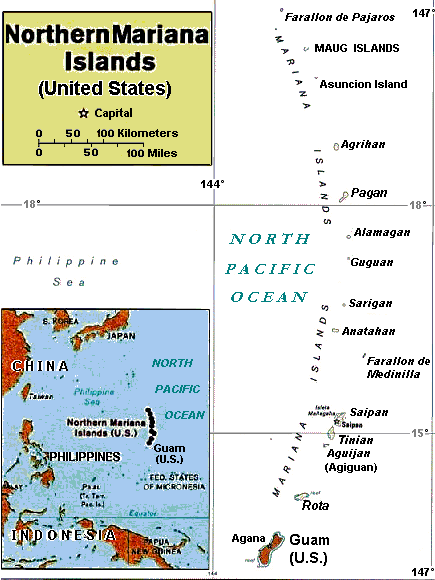
1521: Ferdinand Magellan sights the Islas de Velas or Ladrones, later renamed Marianas in honor of Maria Ana of Austria, Queen Regent of Spain. The Marianas and specifically the island of Guam were a stopover for Spanish galleons en route from Acapulco, Mexico to Manila, Philippines in a convoy known as the Galeon de Manila. The Marianas remained a Spanish colony under the general government of the Philippines until 1898, when, as a result of the Spanish-American War, Spain ceded Guam to the United States.

1608: Philip III tries to put a stop to the abuses of the Spanish authorities in the Islands by means of a strongly-worded cedula. He especially objects to the drafting of workers during the planting and harvesting seasons and to unjust levies.

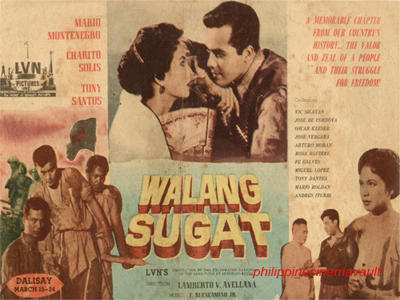
1872: Birth of Victorino Carrion, musician, in Quiapo, Manila. Victorino Carrion was an operatic singer best known for his role as Teñong, in the Severino Reyes zarzuela, Walang Sugat. He and fellow actor Maria Carpena were among the first Filipino recording artists. His father was Balbino Carrion, a tenor and the lead singer of the Quiapo Church choir during the 1800s. Died on May 9, 1935.

1899: A force of Filipinos, said to be the largest body yet encountered east of Manila, resists the advance by General Hale’s brigade on Santolan and Mariquina. Apolinario Mabini sends President Aguinaldo a complaint against the arbitrary acts committed by General Antonio Luna. Mabini writes that to be shot to death without summary trial is a punishment that cannot be enforced except among savages.

1901: Apolinario Mabini writes a letter informing the President of his conference with William H. Taft regarding the Philippine question. The latter replied that the U.S. could not recognize Philippine independence.

1921: Hilaria del Rosario de Aguinaldo dies. Hilaria was the first wife of General Emilio Aguinaldo, the first President of the Philippines (1898-1901). Emilio Aguinaldo married her on New Year's Day, 1896, the very same day he joined the Katipunan, the secret societ y that would initiate the Philippine Revolution .

1924: Act 3131 authorizes the separation of the Municipality of Conception on the Island of Maestro de Campo (Sebali) from Romblon and its annexation to Mindoro.

1947: President Roxas declares the Hukbalahap illegal, as it is alleged to have been organized and maintained to commit sedition and to overthrow the government by force. In the following months, the Huks lay low and occupy themselves with the organization of urban workers and the activation of labor unions. Labor unions are integrated into the Congress of Labor organization, headed by Jose and Jesus Lava.

1966: The Santo Tomas University Hospital is formally inaugurated. The University of Santo Tomas Hospital (simply UST Hospital or USTH) is located inside the España, Manila Campus of University of Santo Tomas. It was founded in 1577 as San Juan de Dios Hospital that became the clinical training institution of medical students of University of Santo Tomas.


2001: Exiled communist leader Jose Ma. Sison expresses his group’s willingness to reopen peace talks with the government through a letter sent to President Arroyo from Utretch, Netherlands, where the founding chair of the Communist NDF takes refuge. Exiled communist leader Jose Ma. Sison expresses his group’s willingness to reopen peace talks with the government through a letter sent to President Arroyo from Utretch, Netherlands, where the founding chair of the Communist NDF takes refuge. The Communist NDF withdrew from talks in 1999 in protest over the senate ratification of the Visiting Forces Agreement (VFA).

NGAYON SA KASAYSAYAN NG PILIPINAS

(TODAY IN HISTORY OF THE PHILIPPINES)because history is the key to the future...