On this date in...
1591: An ordinance is issued in the city of Manila forbidding the wearing of silk and other fabrics from China, for the reason, that it is detrimental to the general welfare and the good government of the city.
1900: For the first time in the American occupation of the Philippines capital punishment is exercised: Morales and Gonzales are accused of banditry, tried, found guilty of murder and hanged.
Showing posts with label 1900. Show all posts
Showing posts with label 1900. Show all posts


Today in History : March 27th
On this date in...


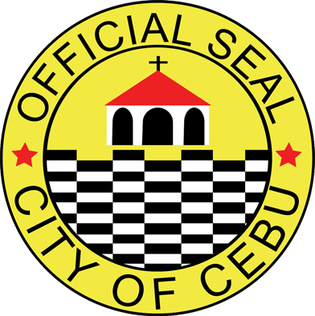
1945: Cebu City is taken by the American forces. Cebu City is the capital city of Cebu and the second city in the Philippines, the second most significant metropolitan centre in the Philippines and known as the oldest city in the country.

1903: In answer to General Luciano San Miguel’s request for advice, Mabini, newly-returned from exile in Guam, asks him to cease his revolutionary activities in the interest of peace and order.

1900: General Jose Ignacio Paua surrenders to the American Forces. Jose Ignacio Paua was a Chinese ironsmith who was appointed a general by President Emilio Aguinaldo in 1896. He was the only foreigner who signedthe Biak-na-Bato constitution. He was introduced to Emilio Aguinaldo and Artemio Ricarte by his best friend General Pantaleon Garcia.
Today in History : March 20th
On this date in...


1596: Felipe II grants the city of Manila a second coat-of-arms. It is more to the liking of the Spaniards than the first.

1784: Governor Jose Basco y Vargas promulgates a decree prohibiting the seizure of farmers’ lands, carabaos, and farm implements by creditors, as well as the farmer’s arrest or imprisonment while planting or harvesting their crops.
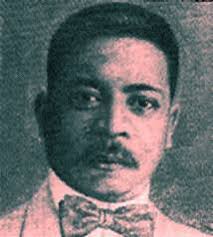
1843: Birth of General Ambrosio Flores, who succeeded General Antonio Luna as Aguinaldo’s secretary of war and revolutionary general. Ambrosio died on June 24, 1912.

1896: Andres Bonifacio decrees that all town presidents of the Katipunan districts must hand in their collections to their respective provincial presidents who, in turn, must submit them to the supreme government of the Katipunan.

1899: General Emilio Aguinaldo and 25,000 well-armed troops digs in at Marilao. His desciplined soldiers keep an impressive line of defense that stretches all the way from Marilao to Malolos.

1900: General Manuel Tinio orders the killing of all officials who fail to report to the nearest guerrilla commander the movements and plans of the American troops. Manuel Tinio y Bundoc was the youngest General of the Philippine Revolutionary Army and in 1907, elected Governor of the Province of Nueva Ecija, Republic of the Philippines.
Today in History : March 16th
On this date in...


1521: Ferdinand Magellan discovered the Philippines where he landed in Samar. Magellan was a Portuguese explorer and was born at Sabrosa, in northern Portugal, but later obtained Spanish nationality in order to serve king Charles I of Spain in search of a westward route to the "Spice Islands".

1705: The Sultan of Jolo, as a token of friendship, writes a letter to Governor-General Zalbálburu informing him that he has chosen to cede to the Spanish Crown his possessions on the island of Paragua, now as Palawan, including the neighboring isle of Lauag, Balabac.

1946:The remains of a number of prominent Filipinos, victims of Japanese Atrocities including Juan M. Elizalde, Enrico Pirovano, Rafael Roces, Jose Mañosa Ozamis, and Virgilio Lobregat, are found in a common grave at the Chinese cemetery.

1900: The Second Philippine Commission, aslo known as Taft Commission, was appointed by McKinley and headed by William Howard Taft, was granted legislative as well as limited executive powers
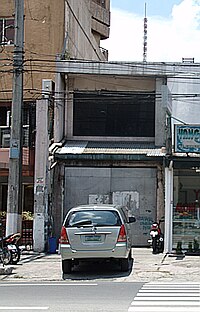
2001: Two owners of Ozone Disco, Ramon NG and Hermilo Ocampo get 4-year jail term and a fine of P20 million after they were declared guilty of “reckless imprudence” resulting to 160 deaths and 195 injuries after a fire erupted on the said disco house on 18 March 1996. The two are also ordered to pay P150, 000 in death indemnity and damages to the families of fatalities and P100, 000 to those who were injured.
Today in History : March 15th
On this date in...


1872: Governor-General Rafael de Izquierdo creates the Telegraph Practical School. Telegraphy is the long-distance transmission of written messages without physical transport of letters. It is a compound term formed from the Greek words tele (τηλε) = far and graphein (γραφειν) = write. Radiotelegraphy or wireless telegraphy transmits messages using radio. Telegraphy includes recent forms of data transmission such as fax, email, telephone networks, and computer networks in general.

1899: General Mariano Trias submits to President Aguinaldo the report of the Commission of Investigation on the incident at San Juan Bridge on February 4, 1899. The Commission concludes that the Americans were the first to fire and that their attack had been premeditated.
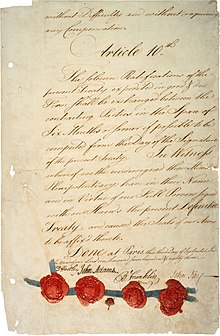
1900: Manila officials do what they can to carry out the provisions of the treaty of Paris. Spanish officers about to be returned to Spain are urged to take their Filipino wives with them. The Treaty of Paris, signed on 3 September 1783, ratified by the Congress of the Confederation on 14 January 1784 and by the King of Great Britain on 9 April 1784, formally ended the American Revolutionary War between the Kingdom of Great Britain and the United States of America, which had rebelled against British rule.

1912: End of the term of William Cameron Forbes as governor-general of the Philippines. He was the son of William Hathaway Forbes, president of the Bell Telephone Company, and wife Edith Emerson, a daughter of Ralph Waldo Emerson, nephew of James Grant Forbes and grandson of Francis Blackwell Forbes. After graduating from Harvard in 1892, he embarked on a business career, eventually becoming a partner in J. M. Forbes and Company.

1946: A scroll commemorating “the brave fight of the Filipino people for liberty” and signed by thousands of war-bond purchasers in the city of Washington, D.C., U.S.A., is handed to Paul V. McNutt for delivery to the Philippines. --President Sergio Osmeña places the Military Police Command of the Philippine Army under the Secretary of the Interior.
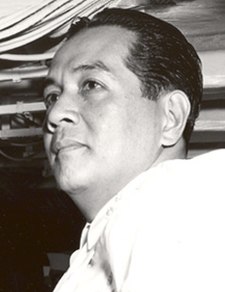
1963: President Macapagal directs Budget Commissioner Faustino Sy-Changco to release the amount of P6 million for the purchase of the Tatalon Estate in Quezon City.
Today in History : March 10th
On this date in...

 1583: Death of Governor-General Gonzalo Ronquillo de Peñalosa, founder of Nueva Caceres in 1582. His first official action was to order Manila to become Philippines's political and economic capital in 1582. That same year, he established the Palacio del Gobernador (Governor's Palace) in Intramuros, Manila to integrate all governmental activities in the Philippines.



 1583: Death of Governor-General Gonzalo Ronquillo de Peñalosa, founder of Nueva Caceres in 1582. His first official action was to order Manila to become Philippines's political and economic capital in 1582. That same year, he established the Palacio del Gobernador (Governor's Palace) in Intramuros, Manila to integrate all governmental activities in the Philippines.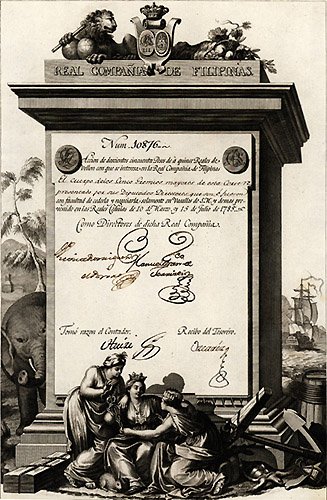
1785: The Real Compañia de Filipinas is established with a capital stock of P8,000,000 in 32,000 shares of P250 each. Its chief objective is to open commercial relations among the different colonies of Spain.

1820: King Ferdinand VII issues his famous manifesto proclaiming the re-establishment of the Cortes and the restoration of the Constitution of 1812.

1869: Birth of Macario Adriatico, lawyer, legislator, orator, scholar, journalist, and editor of La Independencia, in Calapan, Mindoro. He also helped liberate Romblon from the colonizers, and became Comandante de Estado Mayor of the Filipino Army in Panay at the dawn of the Filipino-American War until 1901. As a writer, Adriatico had contributed many of his works to several publications, and edited the Partido Conservador's Diario de Filipinos in 1907. Died on April 14, 1919.

1892: The lodge Nilad, which was established by Pedro Serrano Laktaw and Antonio Luna, is recognized by the Gran Oriente Español, the Spanish mother lodge.

1899: The U.S. transport Grant, with Major-General Henry Lawton, the Fourth Infantry, and a battalion of the Seventeenth Infantry aboard, arrives in Manila. The Council of Government agrees with the Permanent Commission of Congress to establish a Supreme Court in the capital of the Republic “because the cases are pilling up for lack of judges to try them.”

1900: President Emilio Aguinaldo issues a proclamation making it “a grave crime against the sovereignty of the Philippine Republic” for friars and other foreign priests, illegally holding ecclesiastical office of the Philippines, to ask the government of the U.S., at war with the Philippine Republic, to re-establish the ecclesiastical order that existed in the country before the Revolution.

1901: Don Isabelo de los Reyes’ periodical, Filipinas Ante Europa, publishes General Emilio Aguinaldo’s general order regulating the exchange of prisoners of war with the Americans and treating as traitors the partisans of the Federal party.

1917: Batangas was formally founded as one of the Philippines's earliest encomiendas. Batangas is one of the most popular tourist destinations near Metro Manila. The province has many beaches and famous for excellent diving spots only a few hours away from Manila. Some of the more notable ones are Anilao in the Municipality of Mabini, Matabungkay in the Municipality of Lian, Punta Fuego in the Municipality of Nasugbu, the Municipality of Calatagan and Laiya in the Municipality of San Juan.

1947: President Manuel A. Roxas narrowly escapes death during a “Parity” rally at Plaza Miranda, Quiapo, Manila. Julio C. Guillen, a barber, hurls a hand grenade on the platform immediately after the President delivers a speech.
Subscribe to:
Posts (Atom)