Showing posts with label 1872. Show all posts

Today in History : March 15th

On this date in...

1872: Governor-General Rafael de Izquierdo creates the Telegraph Practical School. Telegraphy is the long-distance transmission of written messages without physical transport of letters. It is a compound term formed from the Greek words tele (τηλε) = far and graphein (γραφειν) = write. Radiotelegraphy or wireless telegraphy transmits messages using radio. Telegraphy includes recent forms of data transmission such as fax, email, telephone networks, and computer networks in general.

1899: General Mariano Trias submits to President Aguinaldo the report of the Commission of Investigation on the incident at San Juan Bridge on February 4, 1899. The Commission concludes that the Americans were the first to fire and that their attack had been premeditated.
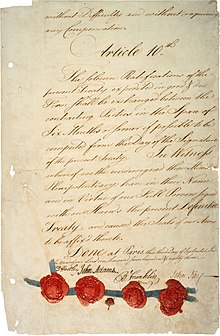
1900: Manila officials do what they can to carry out the provisions of the treaty of Paris. Spanish officers about to be returned to Spain are urged to take their Filipino wives with them. The Treaty of Paris, signed on 3 September 1783, ratified by the Congress of the Confederation on 14 January 1784 and by the King of Great Britain on 9 April 1784, formally ended the American Revolutionary War between the Kingdom of Great Britain and the United States of America, which had rebelled against British rule.

1912: End of the term of William Cameron Forbes as governor-general of the Philippines. He was the son of William Hathaway Forbes, president of the Bell Telephone Company, and wife Edith Emerson, a daughter of Ralph Waldo Emerson, nephew of James Grant Forbes and grandson of Francis Blackwell Forbes. After graduating from Harvard in 1892, he embarked on a business career, eventually becoming a partner in J. M. Forbes and Company.

1946: A scroll commemorating “the brave fight of the Filipino people for liberty” and signed by thousands of war-bond purchasers in the city of Washington, D.C., U.S.A., is handed to Paul V. McNutt for delivery to the Philippines. --President Sergio Osmeña places the Military Police Command of the Philippine Army under the Secretary of the Interior.
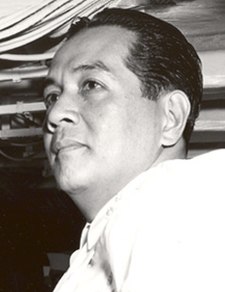
1963: President Macapagal directs Budget Commissioner Faustino Sy-Changco to release the amount of P6 million for the purchase of the Tatalon Estate in Quezon City.

Today in History : March 14th

On this date in...

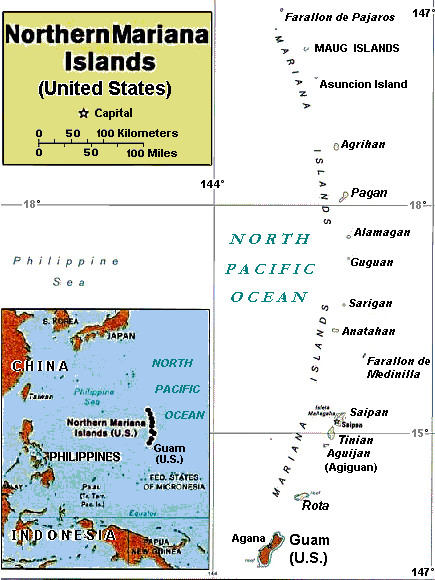
1872: Jose Maria Basa, Antonio Maria Regidor, Balbino Mauricio, Ramon Maurente, Maximo Paterno, Father of Jose Maria Guevara, Father Agustin Mendoza, Feliciano Gomez, Pedro Dandan, Anacleto Desiderio, Miguel Lara, Miguel Rodriguez, Miguel Fernandez, Joaquin Pardo de Tavera, Pio Maria Basa, Father Mariano Sevilla, and others, sail on board the Flores de Maria bound for the Marianas islands to serve their prison terms for complicity in the Cavite Uprising.

1898: From Malolos Don Pedro A. Paterno replies to General Aguinaldo’s letter stating that he did not consent to the division of the P200,000 received from the Spanish Government by the revolutionary leaders left behind in Biyak-na-Bato. He says that he arrived in Manila from Hongkong on January 11, 1898 and learned that the money had been divided by the leaders on December 29, 1897.

1899: General Otis reports to the Adjutant-General in Washington that General Wheaton has attacked a large force of “the enemy” with heavy losses on the “Filipino” side. Other dispatches state that “fierce opposition” was offered by the Filipinos. Major Grant is ordered to take one of the gunboats and destroy all the vessels in Laguna de Bay.

1901: General Mariano Trias surrenders to the Americans in Santa Cruz de Malabon, Cavite. Mariano Trías y Closas is considered to be the first de facto Philippine Vice President of that revolutionary government established at the Tejeros Convention - an assembly of Philippine revolutionary leaders that elected officials of the revolutionary movement against the colonial government of Spain.

Today in History : March 6th

On this date in...

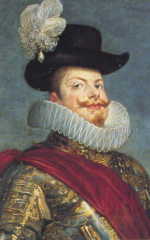
1521: Ferdinand Magellan sights the Islas de Velas or Ladrones, later renamed Marianas in honor of Maria Ana of Austria, Queen Regent of Spain. The Marianas and specifically the island of Guam were a stopover for Spanish galleons en route from Acapulco, Mexico to Manila, Philippines in a convoy known as the Galeon de Manila. The Marianas remained a Spanish colony under the general government of the Philippines until 1898, when, as a result of the Spanish-American War, Spain ceded Guam to the United States.

1608: Philip III tries to put a stop to the abuses of the Spanish authorities in the Islands by means of a strongly-worded cedula. He especially objects to the drafting of workers during the planting and harvesting seasons and to unjust levies.

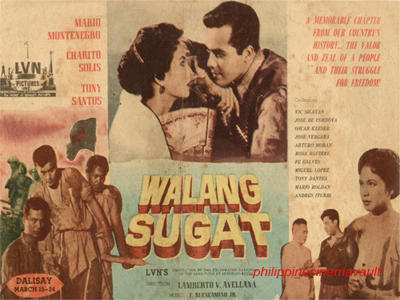
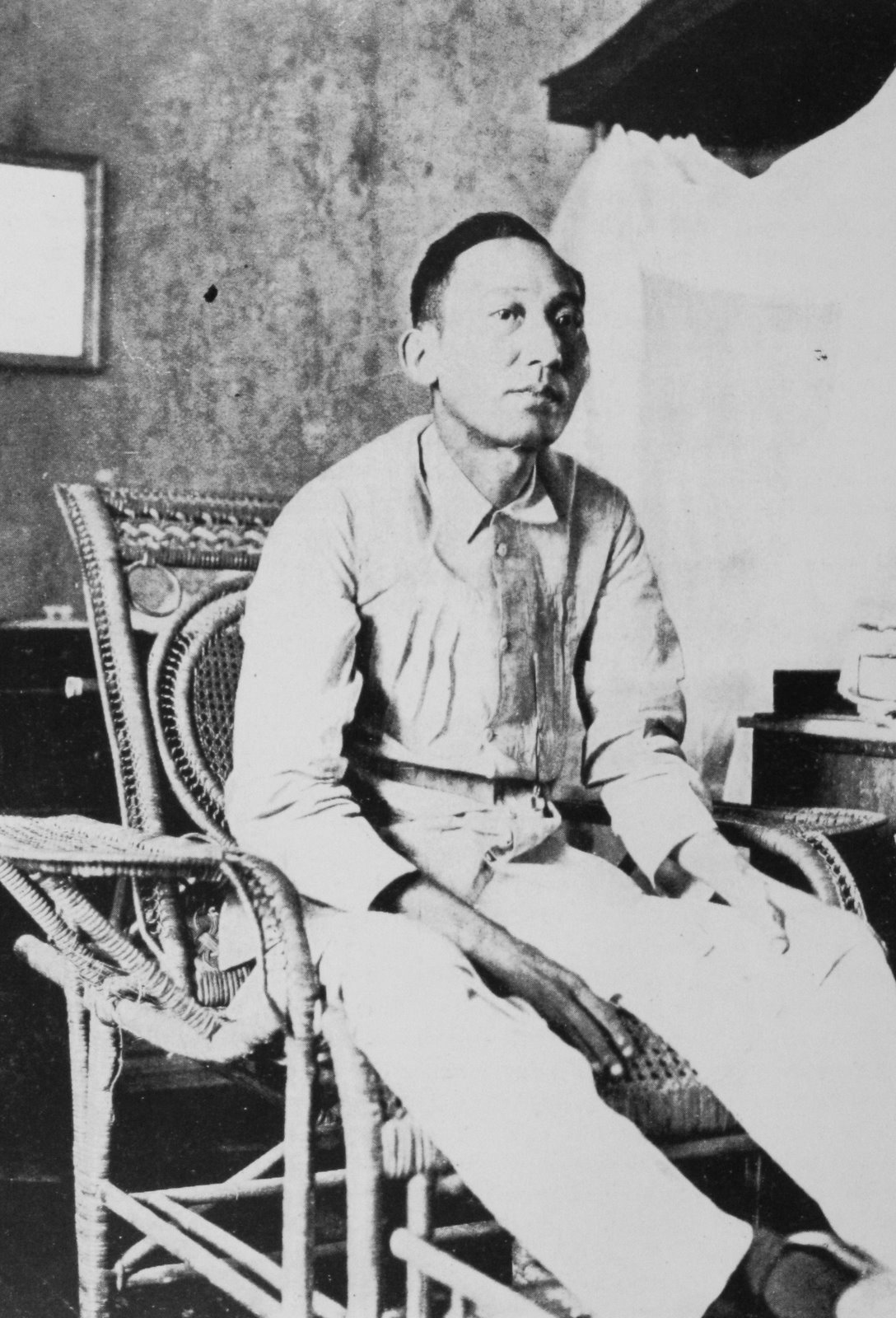
1872: Birth of Victorino Carrion, musician, in Quiapo, Manila. Victorino Carrion was an operatic singer best known for his role as Teñong, in the Severino Reyes zarzuela, Walang Sugat. He and fellow actor Maria Carpena were among the first Filipino recording artists. His father was Balbino Carrion, a tenor and the lead singer of the Quiapo Church choir during the 1800s. Died on May 9, 1935.

1899: A force of Filipinos, said to be the largest body yet encountered east of Manila, resists the advance by General Hale’s brigade on Santolan and Mariquina. Apolinario Mabini sends President Aguinaldo a complaint against the arbitrary acts committed by General Antonio Luna. Mabini writes that to be shot to death without summary trial is a punishment that cannot be enforced except among savages.

1901: Apolinario Mabini writes a letter informing the President of his conference with William H. Taft regarding the Philippine question. The latter replied that the U.S. could not recognize Philippine independence.

1921: Hilaria del Rosario de Aguinaldo dies. Hilaria was the first wife of General Emilio Aguinaldo, the first President of the Philippines (1898-1901). Emilio Aguinaldo married her on New Year's Day, 1896, the very same day he joined the Katipunan, the secret societ y that would initiate the Philippine Revolution .

1924: Act 3131 authorizes the separation of the Municipality of Conception on the Island of Maestro de Campo (Sebali) from Romblon and its annexation to Mindoro.

1947: President Roxas declares the Hukbalahap illegal, as it is alleged to have been organized and maintained to commit sedition and to overthrow the government by force. In the following months, the Huks lay low and occupy themselves with the organization of urban workers and the activation of labor unions. Labor unions are integrated into the Congress of Labor organization, headed by Jose and Jesus Lava.

1966: The Santo Tomas University Hospital is formally inaugurated. The University of Santo Tomas Hospital (simply UST Hospital or USTH) is located inside the España, Manila Campus of University of Santo Tomas. It was founded in 1577 as San Juan de Dios Hospital that became the clinical training institution of medical students of University of Santo Tomas.


2001: Exiled communist leader Jose Ma. Sison expresses his group’s willingness to reopen peace talks with the government through a letter sent to President Arroyo from Utretch, Netherlands, where the founding chair of the Communist NDF takes refuge. Exiled communist leader Jose Ma. Sison expresses his group’s willingness to reopen peace talks with the government through a letter sent to President Arroyo from Utretch, Netherlands, where the founding chair of the Communist NDF takes refuge. The Communist NDF withdrew from talks in 1999 in protest over the senate ratification of the Visiting Forces Agreement (VFA).

Today in History : March 5th

On this date in...

1872: Thirteen Spanish vessels attack Jolo, killing three men and one woman and losing two officers and 100 soldiers. Jolo is a volcanic island in the southwest Philippines. It is located in the Sulu Archipelago, between Mindanao and Borneo, and has a population of approximately 300,000 people. Jolo is also the name of the town on the island which serves as the capital of the province of Sulu, within the Autonomous Region in Muslim Mindanao.

1899: A band of Filipino fire on some crew members of the U.S.S. Bennington, giving the impression to washington that the Americans are getting nervous and restless under the harassment of the Filipinos.

1901: The American Circulating Library is established in Manila. As the Philippine-American War died down and peace gradually returned to the Philippines, Americans who had come to settle in the islands saw the need for a wholesome recreational outlet. Recognizing this need, Charles Greenleaf and several other American women organized the American Circulating Library (ACL), dedicated in memory of American soldiers who died in the Philippine-American War.

1952: Because the Philippine colony is generally prosperous, trade is flourishing, the religious orders are at peace, the cathedral is completed, a seminary for girls established, Pope Clement VIII sends a letter of congratulations to the bishop, clergy and people of the Philippines.

1986: Jose Maria Sison is released from his 8 years and three months detention in Fort Bonifacio. Also released are Bernabe Buscayno, Ruben Alegre, the identified head of the NPA Sparrow Unit, and Alex Buendo, the head of the armed citizen's partisans in Metro Manila.

Today in History : February 15th

On this date in...

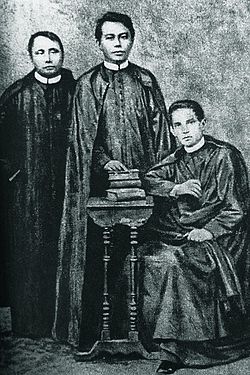
1872: The "GOMBURZA" Filipino priest-martyrs are tried by the colonial Spanish military tribunal at the Fort Santiago on charges of instigating the Cavite Mutiny; Fathers Mariano Gomez, Jose Apolonio Burgos, and Jacinto Zamora, who have advocated the secularization of the clergy in the Philippines, will be found guilty and sentenced to death.

1954: During World War II, Headquarters Squadron 11 participated in campaigns in the Solomon Islands, New Britain, Peleliu, Central Pacific, and Philippines Islands campaign. On February 15, 1954, Headquarters and Service Battalion 11 was redesignated Headquarters and Maintenance Squadron 11 (H&MS-11).

1998: During the American occupation of the Philippines, Parañaque became one of the first municipalities in the Metro Manila region. It was converted into a chartered city.

NGAYON SA KASAYSAYAN NG PILIPINAS

(TODAY IN HISTORY OF THE PHILIPPINES)because history is the key to the future...