Showing posts with label 1942. Show all posts

Today in History : March 21st

On this date in...

1568: Rajah Tupas, of Cebu, is converted to the Catholic religion. At the age of 70, he is baptized by Father Diego Herrera, Augustinian, and receives the name of Felipe, in honor of King Philip II. Rajah Tupas was the Rajah (King) of Cebu in the Philippines. He was the son of Sri Parang the Limp, and the nephew of Rajah Humabon.


1901: The Department of Public Instruction, Department of Education,  is created. It proposes the establishment of public schools in every town in the islands, a normal school and a trade school at Manila, and an agricultural school.

1942: General Jonathan Wainwright takes over the command of the U.S. forces in the Philippines. Jonathan Mayhew "Skinny" Wainwright IV was a career American army officer and the commander of Allied forces in the Philippines at the time of their surrender to the Empire of Japan during World War II. Wainwright is a recipient of the Medal of Honor.

1946: After reviewing the decision of the military commission in Manila which sentenced Lieutenant-General Masaharu Homma to death by firing squad, General Douglas MacArthur orders Lieutenant –General W.D. Styer to carry out the verdict.

1958: General Aguinaldo, as guest of an American naval officer, rides a helicopter to witness “Operations Bulwark One,” a set of naval exercises by the combined U.S. and Philippine naval units off Corregidor.

Today in History : March 11th

On this date in...

1565: Miguel López de Legazpi reaches Camiguin from Limasawa. Legaspi, also known as El Adelantado (The Governor) and El Viejo (The Elder), was a Spanish conquistador who established one of the first European settlements in the East Indies and the Pacific Islands in 1565. After obtaining peace with various indigenous tribes, López de Legazpi made the Philippines the capital of the Spanish East Indies in 1571.

1576: Juan de Salcedo, “the Hernan Cortes of the Philippines,” dies at Vigan. Juan de Salcedo was a Spanish conquistador. He was born in Mexico in 1549 and he was the grandson of Miguel López de Legazpi and brother of Felipe de Salcedo. Salcedo was one of the soldiers who accompanied the Spanish colonization of the Philippines in 1565.

1876: A protocol signed by England and Germany recognizes Spanish rights to the Tawi-Tawi group and the chain of islands stretching from Sulu to Borneo.

1876: A Supreme Court is established in the City of Cebu. Cebu is a province in the Philippines, consisting of Cebu island and 167 surrounding islands. It is located to the east of Negros, to the west of Leyte and Bohol islands.

1892: A royal decree is issued creating the Superior Normal School for Women Teachers in Manila under the direction of the Augustinians. University of Wisconsin–Superior is it's name today.

1898: General Emilio Aguinaldo appoints General Ambrosio Flores as quarter master for the armed forces of the Philippine Revolutionary government.

1899: Premier Mabini sends telegrams to the municipal and military chiefs of the provinces along the coasts instructing them to admit foreign merchant ships which might want to take loads of merchandise. --Desultory firing occurs at San Pedro Makati and caloocan. Filipinos are driven from a trench they have begun to construct. A War Department order withraws permission for families of officers and enlisted of officers and enlisted men to accompany troops to Manila.

1942: General Douglas MacArthur and his family leave Corregidor for Australia.

1945: Romblon and Zamboanga are occupied by the Americans in World War II.

1946: Col. Akira Nagahama, terror of Fort Santiago and head of the kempeitai during the latter part of the Japanese occupation, is found guilty and sentenced to death by hanging by the U.S. military tribunal.

1947: The Filipino people, headed by Manuel A. Roxas, ratifies the nation-wide plebiscite on the “Parity Amendment” to the Constitution. This gives the Americans and Filipinos equal rights in the exploitation of the natural resources of the Philippines.

1988: To counteract the threat of war in Mindanao, the government creates the Regional Consultative Commission. The commission is given the task to draft a charter for an autonomous region in Mindanao. The body is composed of 55 members, 27 from electoral districts in Mindanao and 28 others chosen by President Aquino. The secretariat is based in Zamboanga City.
Today in History : January 20th

On this date in...

1942: During World War II, Japan's Congress grants the Philippines the "honor of independence" on the condition that the Filipinos collaborate in the promotion of the Co-Prosperity Sphere.

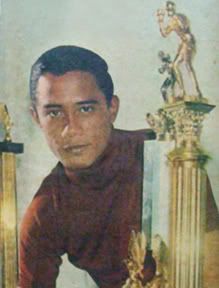
1947: Erbito Salavaria was a retired Filipino professional boxer who was born in Sta. Cruz, Manila, Philippines. He was known as the one of Asia’s best during the 70’s in the flyweight division.

1984: Toni Gonzaga was born in Taytay, Province of Rizal, Philippines. She is a Filipina commercial model, singer and an actress. She had been participating in various singing competitions since she was seven and finally entered the showbusiness at the age of thirteen when she became a contestant in a singing competition.

2001: the Supreme Court declared the presidency vacant. Arroyo was sworn in on the same day as the 14th president of the Philippines by Supreme Court Chief Justice Hilario Davide, Jr. In her speech before the people at EDSA, Arroyo reiterated the following principles that her administration will pursue: being bold in national ambition to win the fight against poverty; improve the moral standards of government and society to provide a strong foundation for good governance; change the politics of personality and patronage to a politics of to a new politics of party programs and process of dialogue with the people; promote leadership by example and solid traits such as work ethic and a dignified lifestyle, matching action to rhetoric, and performing rather than grandstanding; pursue an economic philosophy of transparency and private enterprise and extend the opportunities to the rural countryside.

Today in History : January 7th

On this date in...


1942: Japanese forces started the siege of the peninsula shortly after the Japanese Army invaded the country in December 1941 and the combined forces of Filipino and US forces were being gradually overrun and General Douglas MacArthur decided to make Bataan the site of a last stand.

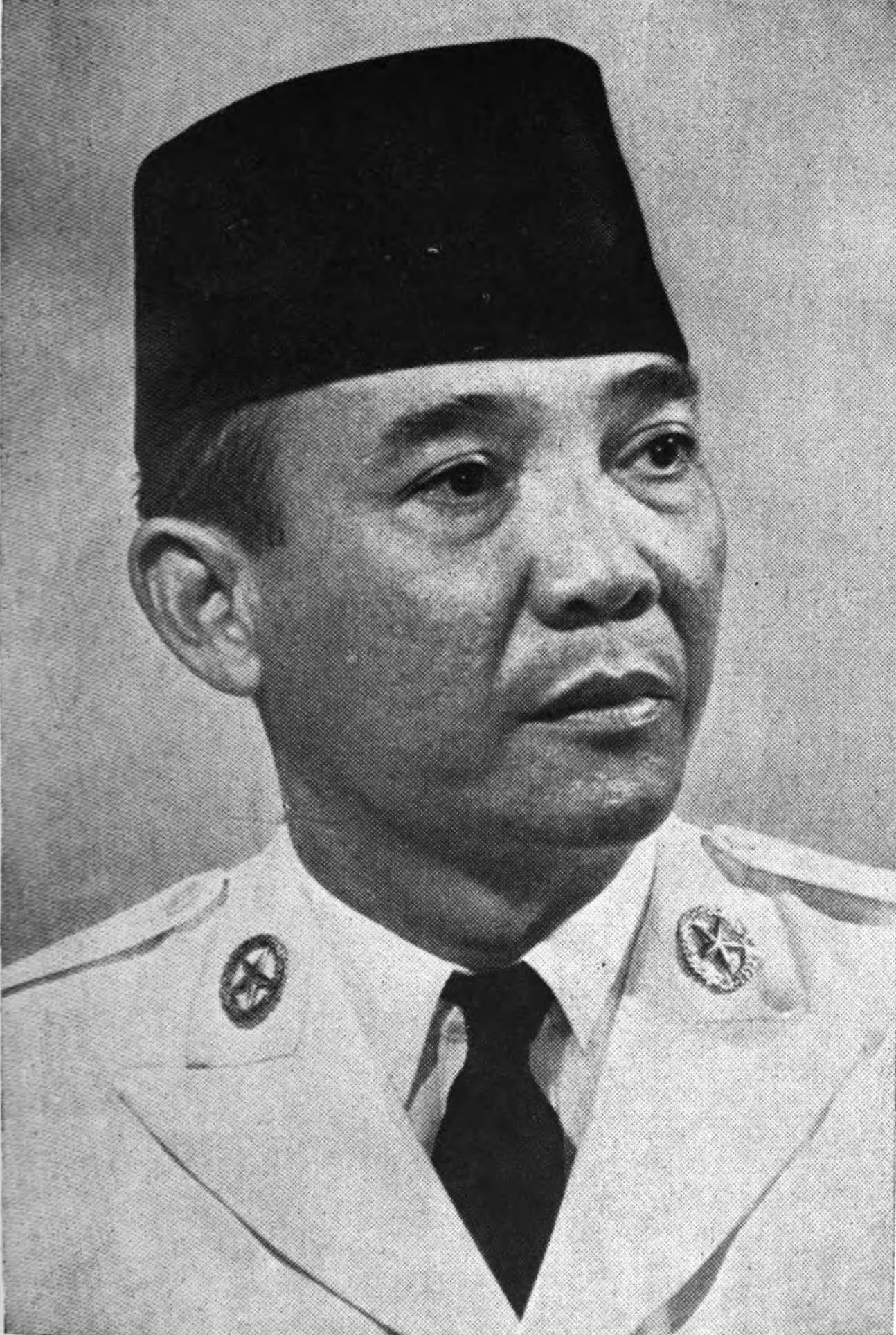
1964: President Sukarno of Indonesia arrived in Manila with a strong Indonesian delegation for important talks on Malaysia with President Macapagal of the Philippines. The Indonesian President was welcomed my President Macapagal, Vice-President Pelaez and senior officials saying "Am I late, or are you too early?"

1973: Steaming via the Panama Canal and Pearl Harbor in Hawaii, Blakely arrived at Subic Bay in the Philippines. Five days later, the warship departed Subic Bay for the Vietnamese combat zone. Her tour of duty in the Far East came at the very end of American participation in the Vietnamese conflict; and, as a consequence, she served only once in the combat zone.
1975: Presidential Decree No. 633 provides for the creation of the National Commission on the Role of Filipino Women (NCRFW). The Commission shall act as an advisory body to the President in formulating policies and implementing programs to ensure the full integration of women for economic, social, and cultural development at the national, regional and international levels, and to ensure further equality between men and women.

Today in History : January 2nd

On this date in...

1899: Apolinario Mabini is appointed Prime Minister to lead the Mabini Cabinet of the First Philippine Republic (which will be inaugurated on January 23, 1899).

1942: General MacArthur declared the capital city, Manila, an open city to prevent its destruction, which he accomplished himself in 1945 while Japanese troops occupy Manila.

NGAYON SA KASAYSAYAN NG PILIPINAS

(TODAY IN HISTORY OF THE PHILIPPINES)because history is the key to the future...