
1872: Governor-General Rafael de Izquierdo creates the Telegraph Practical School. Telegraphy is the long-distance transmission of written messages without physical transport of letters. It is a compound term formed from the Greek words tele (τηλε) = far and graphein (γραφειν) = write. Radiotelegraphy or wireless telegraphy transmits messages using radio. Telegraphy includes recent forms of data transmission such as fax, email, telephone networks, and computer networks in general.

1899: General Mariano Trias submits to President Aguinaldo the report of the Commission of Investigation on the incident at San Juan Bridge on February 4, 1899. The Commission concludes that the Americans were the first to fire and that their attack had been premeditated.
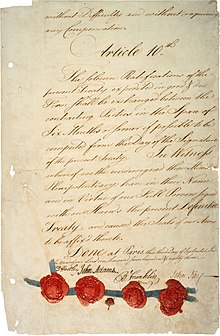
1900: Manila officials do what they can to carry out the provisions of the treaty of Paris. Spanish officers about to be returned to Spain are urged to take their Filipino wives with them. The Treaty of Paris, signed on 3 September 1783, ratified by the Congress of the Confederation on 14 January 1784 and by the King of Great Britain on 9 April 1784, formally ended the American Revolutionary War between the Kingdom of Great Britain and the United States of America, which had rebelled against British rule.

1912: End of the term of William Cameron Forbes as governor-general of the Philippines. He was the son of William Hathaway Forbes, president of the Bell Telephone Company, and wife Edith Emerson, a daughter of Ralph Waldo Emerson, nephew of James Grant Forbes and grandson of Francis Blackwell Forbes. After graduating from Harvard in 1892, he embarked on a business career, eventually becoming a partner in J. M. Forbes and Company.

1946: A scroll commemorating “the brave fight of the Filipino people for liberty” and signed by thousands of war-bond purchasers in the city of Washington, D.C., U.S.A., is handed to Paul V. McNutt for delivery to the Philippines. --President Sergio Osmeña places the Military Police Command of the Philippine Army under the Secretary of the Interior.
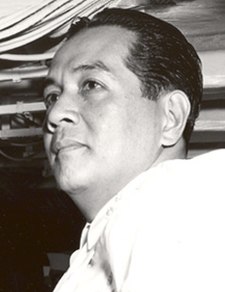
1963: President Macapagal directs Budget Commissioner Faustino Sy-Changco to release the amount of P6 million for the purchase of the Tatalon Estate in Quezon City.


