Showing posts with label 1869. Show all posts

Today in History : March 22nd

On this date in...

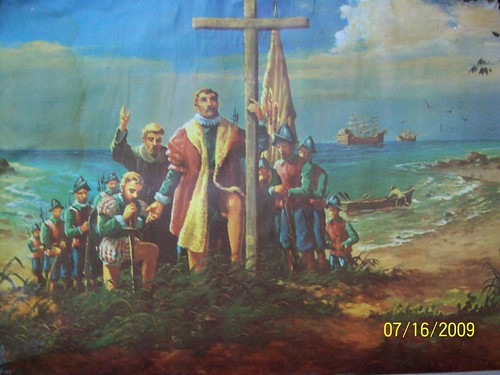
1521: The Filipinos return to Homonhon, an island in the province of Eastern Samar on the west side of Leyte Gulf witch is about 20 km long. bringing with them two boats heavily laden with coconuts, oranges, palm wine, and a rooster. Accompanying the Filipinos is their chieftain. His face is tattooed and he wears gold earrings and bracelets and a cotton skirt hemmed with silk tassels. His weapons are made of bronze generously mixed with tin alloys. His shield, javelin, and dagger are laid with gold. His appearance convinces the Spaniards that the Filipinos have attained a considerable degree of civilization and much wealth.

1863: Birth of Mariano Ponce in Baliwag, Bulacan where he completed his primary education. He later enrolled at the Colegio de San Juan de Letran and took up medicine at the University of Santo Tomas. In 1881, he traveled to Spain to continue his medical studies at the Unversidad Central de Madrid. Mariano Ponce was a Filipino physician who was one of the leaders of the Propaganda Movement, that founded the Philippine Revolution. He died on May 23, 1918.

1869: Birth of Emilio Aguinaldo. Emilio was a Filipino general, politician, and independence leader of Chinese and Spanish descent. He played an instrumental role in Philippine independence during the Philippine Revolution against Spain and the Philippine-American War that resisted American occupation. He eventually pledged his allegiance to the US government. Aguinaldo is considered to be the country's first and the youngest Philippine President and also the longest living Philippine President. Died on February 6, 1964.

1897: The Tejeros Convention proclaims the Republic of the Philippines. The newly elected officials are Emilio Aguinaldo, President; Mariano Trias, Vice-President; Artemio Ricarte, Captain-General; Emilio Riego de Dios, Director of War; and Andres Bonifacio, Director of the Interior.

1901: General Leandro Fullon surrenders to Major Scott of the United States Army, through the mediation of General Delgado, Cornelio Meliza, and others.
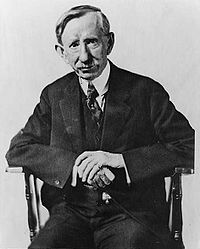
1915: Frank W. Carpenter, governor of Mindanao, negotiates a formal agreement with Jamalul Kiram II, Sultan of Jolo, whereby the latter gives up his political right as ruler and retains only his position as spiritual head of the Muslims. In return, the Sultan is granted an annual pension of P12,000 and some lands in Jolo. The abolition of the Sultanate does not do away with Sultan’s line of succession.

Today in History : March 10th

On this date in...

1583: Death of Governor-General Gonzalo Ronquillo de Peñalosa, founder of Nueva Caceres in 1582. His first official action was to order Manila to become Philippines's political and economic capital in 1582. That same year, he established the Palacio del Gobernador (Governor's Palace) in Intramuros, Manila to integrate all governmental activities in the Philippines.

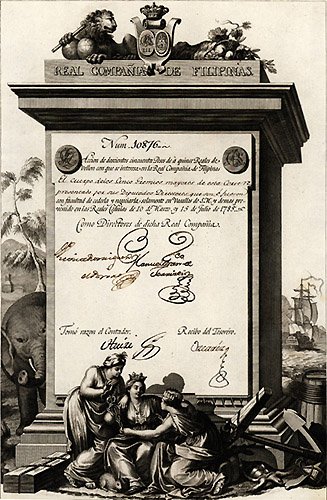
1785: The Real Compañia de Filipinas is established with a capital stock of P8,000,000 in 32,000 shares of P250 each. Its chief objective is to open commercial relations among the different colonies of Spain.

1820: King Ferdinand VII issues his famous manifesto proclaiming the re-establishment of the Cortes and the restoration of the Constitution of 1812.

1869: Birth of Macario Adriatico, lawyer, legislator, orator, scholar, journalist, and editor of La Independencia, in Calapan, Mindoro. He also helped liberate Romblon from the colonizers, and became Comandante de Estado Mayor of the Filipino Army in Panay at the dawn of the Filipino-American War until 1901. As a writer, Adriatico had contributed many of his works to several publications, and edited the Partido Conservador's Diario de Filipinos in 1907. Died on April 14, 1919.

1892: The lodge Nilad, which was established by Pedro Serrano Laktaw and Antonio Luna, is recognized by the Gran Oriente Español, the Spanish mother lodge.
1899: The U.S. transport Grant, with Major-General Henry Lawton, the Fourth Infantry, and a battalion of the Seventeenth Infantry aboard, arrives in Manila. The Council of Government agrees with the Permanent Commission of Congress to establish a Supreme Court in the capital of the Republic “because the cases are pilling up for lack of judges to try them.”

1900: President Emilio Aguinaldo issues a proclamation making it “a grave crime against the sovereignty of the Philippine Republic” for friars and other foreign priests, illegally holding ecclesiastical office of the Philippines, to ask the government of the U.S., at war with the Philippine Republic, to re-establish the ecclesiastical order that existed in the country before the Revolution.

1901: Don Isabelo de los Reyes’ periodical, Filipinas Ante Europa, publishes General Emilio Aguinaldo’s general order regulating the exchange of prisoners of war with the Americans and treating as traitors the partisans of the Federal party.

1917: Batangas was formally founded as one of the Philippines's earliest encomiendas. Batangas is one of the most popular tourist destinations near Metro Manila. The province has many beaches and famous for excellent diving spots only a few hours away from Manila. Some of the more notable ones are Anilao in the Municipality of Mabini, Matabungkay in the Municipality of Lian, Punta Fuego in the Municipality of Nasugbu, the Municipality of Calatagan and Laiya in the Municipality of San Juan.

1947: President Manuel A. Roxas narrowly escapes death during a “Parity” rally at Plaza Miranda, Quiapo, Manila. Julio C. Guillen, a barber, hurls a hand grenade on the platform immediately after the President delivers a speech.

NGAYON SA KASAYSAYAN NG PILIPINAS

(TODAY IN HISTORY OF THE PHILIPPINES)because history is the key to the future...