Today in History : January 16th

On this date in...

1967: The Southeast Asian Fisheries Development Center (SEAFDEC)was established. SEAFDEC is currently made up of 11 Member Countries, namely Brunei Darussalam, Cambodia, Indonesia, Japan, Lao PDR, Malaysia, Myanmar, the Philippines, Singapore, Thailand and Vietnam; and has the Council of Directors, composed of nominees from Member Countries, as policy-making body to provide directives and guidance on activities of the Center.

1981: The Lung Center of the Philippines which provides health care specifically on lung and pulmonary diseases, was established in Quezon City by President Ferdinand E. Marcos under Presidential Decree No. 1823.

1899: The members of the first Philippine Commission were appointed by President William McKinley. Also known as the Schurman Commission, it was composed of Jacob Schurman as chairman and George Dewey, Elwell Otis, Dean Worcester, and Charles Denby as members.

2007: Jainal Antel Sali, Jr., leader of Abu Sayyaf A.K.A. Abu Solaiman, Abu Solajman, Abu Sulaiman, Abu Sulayman, and Jainal Antal Sali, Jr., was killed during a gunfight with Armed Forces of the Philippines Airborne Special Forces soldiers in a village about 590 miles south of Manila. Local villagers and Sali's wife identified his body.

Today in History : January 15th

On this date in...

1913: The Department of Instruction authorized the reopening of the Primary Course after the Philippine Revolution ended Spanish sovereignty in the Philippines suspending the authorization to operate the Normal School. This was a trying time for the College. The intermediate and college levels soon followed. With the new organization enrollment grew and better times came.


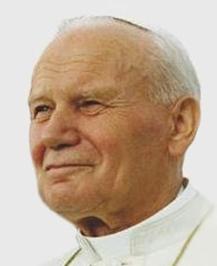
1995: A suicide bomber would dress up as a priest while John Paul II was in his motorcade on his way to visiting the Federation of Asian Bishops' Conference at the San Carlos Seminary, which is located along Edsa, Guadalupe, Makati City. The assassin would stick a bomb inside one of his sleeves of the robe. He would then use the disguise to get closer to the Pope, and detonate the bomb when Pope John Paul II would approach to kiss him. The planned assassination of the Pope was intended to divert attention from the next part of the phase. About 20 men had been trained by Yousef to carry out this act prior to January 1995.

2006: At least 16 people, most of them children, drowned when a packed wooden motorboat capsized during a religious parade on the central Philippine island of Leyte yesterday, a senior coast guard official said. Several people are missing and about 30 were rushed to hospitals in San Ricardo town after the accident during the Feast of Saint Nino, one of the most revered religious festivals in the mainly Roman Catholic country. “We’ve dispatched more search-and-rescue ships to the area,” coastguard commander Arthur Gosingan said. “We’re getting very sketchy reports. We have no idea how many people were on the boat when it capsized and sank near the wharf this morning.” He said officials feared the number of dead could rise. The Feast of Saint Nino, usually celebrated on the third Sunday of January, is one of the most colourful religious festivals in a country where Roman Catholicism blends with pre-colonial pagan ceremonies.

Today in History : January 14th

On this date in...

1898: Macabulos disbanded his troops and accepted amnesty after receiving P14,000 as part of Spanish reparations to Filipino revolutionaries after refusing to honor the Pact of Biak-na-Bato, which called for a truce with the Spanish colonial government, and continued operations in Central Luzon. Macabulos distributed the money to his men.

2002: the United States and the Philippines prepared for joint military operations against Abu Sayyaf, an extremist Muslim group with links to Al Qaeda. A plan was agreed to by the two countries whereby 650 U.S. military personnel were to be sent to the Philippines within weeks.

Today in History : January 13th

On this date in...

1933: the Congress of the United States passed the Howes-Cutting Bill granting Philippine independence after 12 years, but reserving military and naval bases for the United States and imposing tariffs and quotas on Philippine exports. The bill was rejected by the Filipinos.

1973: Presidential Decree No. 96 was issued declaring it unlawful for any owner or possessor of any motor vehicle to use or attach to his vehicle any siren, bell, horn, whistle or similar gadgets that produce exceptionally loud or starting sounds, including domelights, blinkers and other similar signaling or flashing devices.

Today in History : January 12th

On this date in...

1903: Imperialist American Civil Governor William Howard Taft opposes the return of Filipino revolutionary leader-on-exile Apolinario Mabini unless he takes the oath of allegiance to the United States; Mabini swears fealty in order to return to the Philippines some two months before his death.

1911: The Board of Regents of the University of the Philippines formally approved the establishment of the College of Law. The College, however, traces its beginnings to the law courses opened in 1910 by the Educational Department Committee of the Young Men’s Christian Association (YMCA), through the efforts of George A. Malcolm who was later to become the first permanent dean of the College.

Today in History : January 11th

On this date in...

1897: Thirteen Filipino revolutionaries and masons known as "Bagumbayan Martyrs" are executed by Spanish colonial authorities during what historian T.M. Kalaw described as a "period of terror" in Spain's bid to contain the revolutionary momentum sweeping the Philippines.

1936: Philippine Army was officially reactivated by virtue of Executive Order No. 11 issued by President Manuel L. Quezon.

1971: The writ of habeas corpus was restored after an explosion during the proclamation rally of the senatorial slate of the Liberal Party on August 21, 1971, witch prompted Marcos to suspend the writ of habeas corpus.

1992: After more than four decades, the Philippine Normal College was elevated into a university by President Corazon Cojuangco Aquino. Philippine Normal University (or PNU) is the National Center for Teacher Education of the Philippines by virtue of Republic Act 9647. PNU was the first institution of higher learning established by the Americans in the Philippines in 1901.

Today in History : January 10th

On this Date in...

2010: Election period begins. Under Philippine laws, “election period" means 120 days before the actual date of the elections and 30 days after it. In the case of the 2010 polls, the election period would be from January 10 to June 9. This 120-day election period contains the actual campaign period, which runs from Feb. 9 to May 8 for national candidates, and from March 26 to May 8 for local candidates.

NGAYON SA KASAYSAYAN NG PILIPINAS

(TODAY IN HISTORY OF THE PHILIPPINES)because history is the key to the future...