Today in History : March 28th

On this date in...

1901: General Emilio Aguinaldo arrives in Manila on the Vicksburg from Palanan, Isabela, a prisoner of Colonel Frederick Funston.

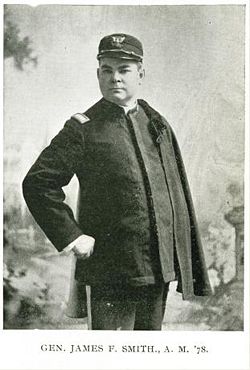
1907: Governor James F. Smith certifies that since the publication of the Philippine Census in 1905 there have been no serious disturbances of the public order save those committed by outlaws and religious fanatics and that the great mass of the Filipinos have been “law-abiding, peaceful and loyal to the United States.” The President of the United States is then formally requested to authorize the Philippine Commission to call a general election to choose delegates to the Philippine Assembly.

1946: Manuel A. Roxas is reported to have declared in Cebu that there is danger of revolution after independence if the people’s faith in the government is undermined.

Today in History : March 27th

On this date in...

1945: Cebu City is taken by the American forces. Cebu City is the capital city of Cebu and the second city in the Philippines, the second most significant metropolitan centre in the Philippines and known as the oldest city in the country.

1903: In answer to General Luciano San Miguel’s request for advice, Mabini, newly-returned from exile in Guam, asks him to cease his revolutionary activities in the interest of peace and order.

1900: General Jose Ignacio Paua surrenders to the American Forces. Jose Ignacio Paua was a Chinese ironsmith who was appointed a general by President Emilio Aguinaldo in 1896. He was the only foreigner who signedthe Biak-na-Bato constitution. He was introduced to Emilio Aguinaldo and Artemio Ricarte by his best friend General Pantaleon Garcia.

Today in History : March 26th

On this date in...

1580: A royal decree provides for appointments to fill vacant benefices in the Cathedral at Manila.

1898: From Madrid, the Minister of War sends a cable to Governor General Fernando Primo de Rivera in Manila, thus: “The attitude and the threatening note of the United States make us believe that war is inevitable.”

1920: The Philippine Legislature passes Act No. 2928 adopting the Philippine flag as the official flag of the Government of the Philippine Islands to be flown next to the American flag.

Today in History : March 25th

On this date in...

1986: President Aquino organizes a revolutionary government and issues the Freedom Constitution to replace the one tailored in 1973 for Marcos. The Freedom Constitution is to remain in effect until a new constitution can be written and ratified.

1901: General Aguinaldo says farewell to his men, through his nephew, Tomas Magsarili, “This afternoon we will board the American cruiser Vicksburg, which will cast anchor here at Sabang. Villa is wounded; Santos and I are not … What happened to me, though somewhat bad, will be transformed into something that will redound to the welfare of the Motherland…”


1990: The International Airport at Laoag, Ilocos Norte, reopens. It had been closed after the EDSA revolution to bar Marcos' return.

Today in History : March 24th

On this date in...

1891: Birth of Mons. Gabriel M. Reyes. Gabriel is the Archbishop of Manila from 1949 to 1952. He entered St. Vicent Ferrer Seminary in Jaro, during the time of Bishop Frederick Rooker. He was ordained a priest on March 27, 1915. He established parochial schools and published the officer newspaper, Diaro-Kanbuhi Sar Banua. In 1920 he became Chancellor of Jaro, then vicar-general, later appointed the first Filipino Archbishop of Cebu in 1934. He was installed Archbishop of Manila on October 14, 1949, the first Filipino in the post. Died on October 10, 1952, in Georgetown University Hospital, Washington, D.C.

1901: General Aguinaldo and his two fellow prisoners, Drs. Villa and Barcelona, try to persuade the Macabebe soldiers in charge of giving them food to join them in turning the tables on Funston, but some of the Macabebes refused to cooperate and the plot failed.

1920: Act No. 2922 of the Philippine Legislature (under the Jones Law) entitled “An Act granting a life pension to General Emilio Aguinaldo,” is approved.

1934:  The Tydings-McDuffie Act (officially the Philippine Independence Act; Public Law 73-127)  was approved. Provided for self-government of the Philippines and for Filipino independence (from the United States) after a period of ten years. World War II intervened, bringing the Japanese occupation between 1941 and 1945. In 1946, the Treaty of Manila (1946) between the governments of the U.S. and the Republic of the Philippines provided for the recognition of the independence of the Republic of the Philippines and the relinquishment of American sovereignty over the Philippine Islands.

2001: Roselle Ambubuyog, a blind young lady, tops 2001 Ateneo de Manila graduates as Summa Cum Laude and class valedictorian. Ambubuyog, blinded for 15 years, proven that physical disability is not a hindrance in excelling and in learning. Roselle is the first visually-impaired Filipina to become summa cum laude at the Ateneo de Manila University.

Today in History : March 23rd

On this date in...

1575: An expedition is sent to Pangasinan under Juan de Salcedo to attack Limahong and his men. In the encounter, the Spaniards are victorious; but, failing to follow up their success, they allow Limahong to sail from Luzon. Lim Hong, also called Lin Feng, was a notorious Chinese pirate.

1863: Birth of Victorino Luciano, pharmacist and one of the 13 martyrs of Cavite. The Thirteen Martyrs of Cavite were patriots in Cavite, Philippines who were executed by mustketry on September 11, 1896, for cooperating with the Katipunan during the Philippine Revolution against Spain. The city of Trece Martires in Cavite is named after them.

1877: Jose Rizal obtains the degree of Bachelor of Arts from the Ateneo Municipal de Manila with highest honors. He graduated as one of the nine students in his class declared sobresaliente or outstanding. He continued his education at the Ateneo Municipal de Manila to obtain a land surveyor and assessor's degree, and at the same time at the University of Santo Tomas Faculty of Arts and Letters where he studied Philosophy and Letters.

1897: Execution of the “Nineteen Martyrs of Aklan.” They are Ramon Aguirre, Tomas Briones, Domingo de la Cruz, Valeriano Dalida, Claro Delgado, Angelo Fernandez, Benito Iban, Candido Iban, Simeon Inocencio, Isidro Jimenez, Gabino Yonsul, Catalino Mangat, Lamberto Mangat, Valeriano Malinda, Maximo Mation, Simplicio Reyes, Canuto Segovia, Gabino Sucgang, Francisco Villorente. The XIX Martyrs of Aklan is annually celebrated as act of commemoration to the heroism of the 19 Martyrs of Aklan who consecrated their lives in the cause of freedom against the colonizers. Under the Republic Act No. 7806, the commemoration of the XIX Martyrs of Aklan is a Special Public Holiday for the whole province.

1901: Pres. Emilio Aguinaldo is captured by General Frederick Funston and his troops and Macabebes in Palanan, Isabela. The Americans pretended to be prisoners of some Filipino mercenaries and thus gained access to the Filipino camp. Once Funston and his “captors” entered Aguinaldo's camp, they immediately fell upon the guards and quickly overwhelmed them and the weary Aguinaldo. However, sporadic insurgent resistance continued in various parts of the Philippines, especially in the Muslim south, until 1913.
Today in History : March 22nd

On this date in...

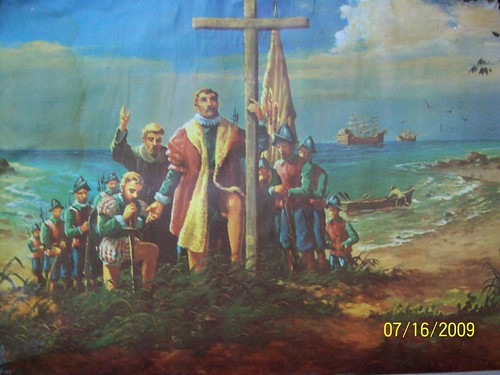
1521: The Filipinos return to Homonhon, an island in the province of Eastern Samar on the west side of Leyte Gulf witch is about 20 km long. bringing with them two boats heavily laden with coconuts, oranges, palm wine, and a rooster. Accompanying the Filipinos is their chieftain. His face is tattooed and he wears gold earrings and bracelets and a cotton skirt hemmed with silk tassels. His weapons are made of bronze generously mixed with tin alloys. His shield, javelin, and dagger are laid with gold. His appearance convinces the Spaniards that the Filipinos have attained a considerable degree of civilization and much wealth.

1863: Birth of Mariano Ponce in Baliwag, Bulacan where he completed his primary education. He later enrolled at the Colegio de San Juan de Letran and took up medicine at the University of Santo Tomas. In 1881, he traveled to Spain to continue his medical studies at the Unversidad Central de Madrid. Mariano Ponce was a Filipino physician who was one of the leaders of the Propaganda Movement, that founded the Philippine Revolution. He died on May 23, 1918.

1869: Birth of Emilio Aguinaldo. Emilio was a Filipino general, politician, and independence leader of Chinese and Spanish descent. He played an instrumental role in Philippine independence during the Philippine Revolution against Spain and the Philippine-American War that resisted American occupation. He eventually pledged his allegiance to the US government. Aguinaldo is considered to be the country's first and the youngest Philippine President and also the longest living Philippine President. Died on February 6, 1964.

1897: The Tejeros Convention proclaims the Republic of the Philippines. The newly elected officials are Emilio Aguinaldo, President; Mariano Trias, Vice-President; Artemio Ricarte, Captain-General; Emilio Riego de Dios, Director of War; and Andres Bonifacio, Director of the Interior.

1901: General Leandro Fullon surrenders to Major Scott of the United States Army, through the mediation of General Delgado, Cornelio Meliza, and others.

1915: Frank W. Carpenter, governor of Mindanao, negotiates a formal agreement with Jamalul Kiram II, Sultan of Jolo, whereby the latter gives up his political right as ruler and retains only his position as spiritual head of the Muslims. In return, the Sultan is granted an annual pension of P12,000 and some lands in Jolo. The abolition of the Sultanate does not do away with Sultan’s line of succession.

NGAYON SA KASAYSAYAN NG PILIPINAS

(TODAY IN HISTORY OF THE PHILIPPINES)because history is the key to the future...